|
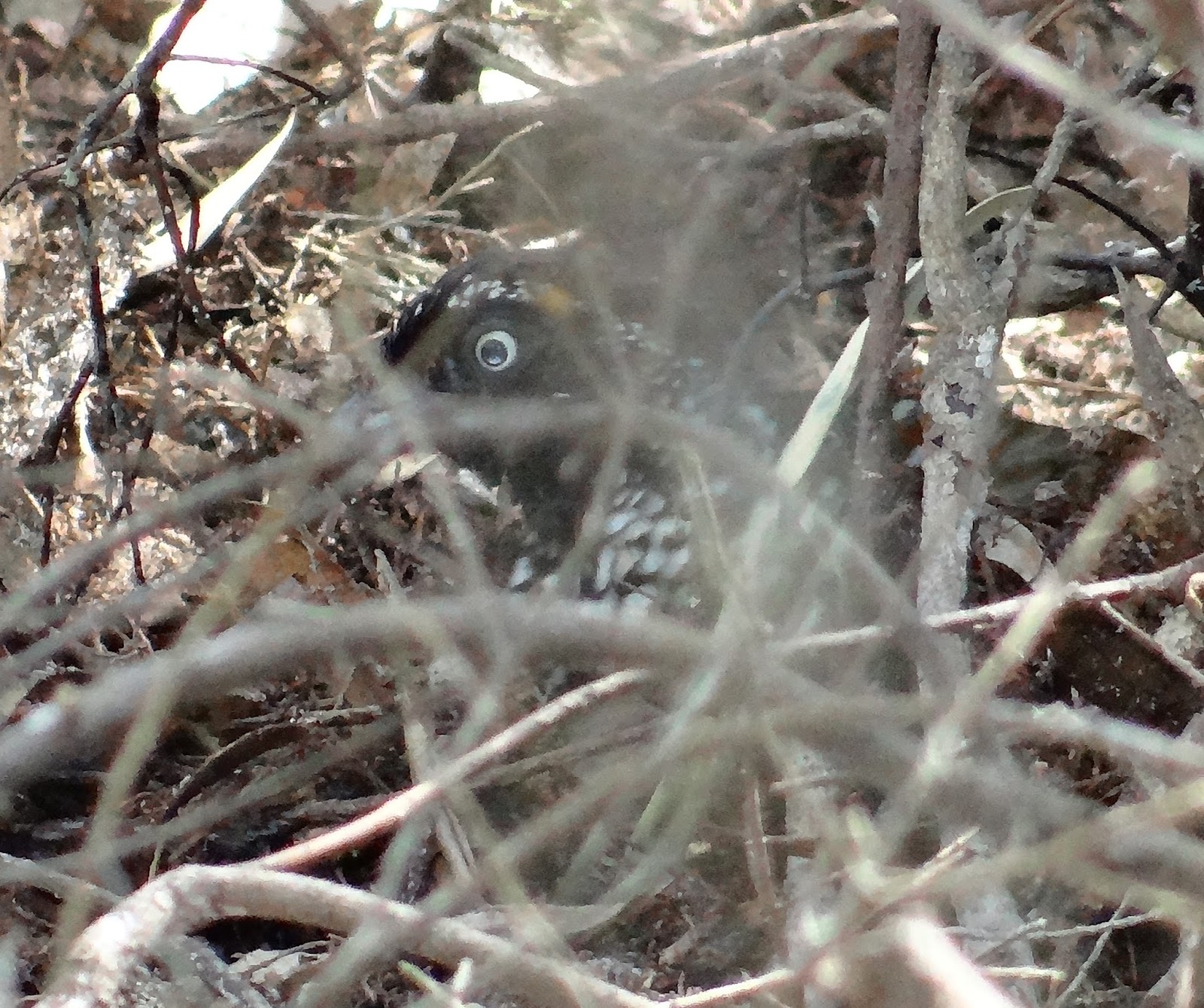
| Glossy Black Cockatoo |
BIRDS OF THE SUNSHINE
COAST
Birds seen by me within the boundaries of the
Sunshine Coast and Noosa councils. The area covered also extends north to the Cooloola sector of the Great Sandy World
Heritage Area; south to Toorbul and Bribie Island; and west to the western slopes of the Conondale Range (see map). The list includes seabirds seen offshore from the coast as far as 35 nautical
miles. It is regularly updated. [] = introduced.
Emu (Dromaius novaehollandiae)
Australasian Grebe (Tachybaptus novaehollandiae)
Great Crested Grebe (Podiceps cristatus)
Buller’s Albatross (Thalassarche bulleri)
Black-browed Albatross (Thalassarche melanophris)
Shy Albatross (Thalassarche cauta)
Light-mantled Sooty Albatross (Phoebetria palpebrata)
Tahiti Petrel (Pseudobulweria rostrata)
Providence Petrel (Pterodroma solandri)
Grey-faced Petrel (Pterodroma gouldi)
Mottled Petrel (Pterodroma inexpectata)
Stejneger’s Petrel (Pterodroma longirostris)
Cook's Petrel (Pterodroma cookii)
Gould's Petrel (Pterodroma leucoptera)
Kermadec Petrel (Pterodroma neglecta)
Soft-plumaged Petrel (Pterodroma mollis)
Fairy Prion (Pachyptila turtur)
Antarctic Prion (Pachyptila desolata)
Black Petrel (Procellaria parkinsoni)
White-chinned Petrel (Procellaria aequinoctialis)
Wedge-tailed Shearwater (Puffinus pacificus)
Buller's Shearwater (Puffinus bulleri)
Flesh-footed Shearwater (Puffinus carneipes)
Short-tailed Shearwater (Puffinus tenuirostris)
Fluttering Shearwater (Puffinus gavia)
Hutton's Shearwater (Puffinus huttoni)
Streaked Shearwater (Calonectris leucomelas)
Wilson's
Storm-petrel (Oceanites oceanicus)
Black-bellied Storm-petrel (Fregetta tropica)
White-bellied Storm-petrel (Fregetta grallaria)
White-faced Storm-petrel (Pelagodroma marina)
Red-tailed Tropicbird (Phaethon rubricauda)
White-tailed Tropicbird (Phaethon lepturus)
Australasian Gannet (Morus serrator)
Brown Booby (Sula leucogaster)
Red-footed Booby (Sula sula)
Masked Booby (Sula dactylatra)
Little Pied Cormorant (Phalacrocorax melanoleucos)
Pied Cormorant (Phalacrocorax varius)
Little Black Cormorant (Phalacrocorax sulcirostris)
Great Cormorant (Phalacrocorax carbo)
Australian Darter (Anhinga novaehollandiae)
Australian Pelican (Pelecanus conspicillatus)
Lesser Frigatebird (Fregata ariel)
White-faced Heron (Egretta novaehollandiae)
Little Egret (Egretta garzetta)
Eastern Reef-egret (Egretta sacra)
Pacific Heron (Ardea pacifica)
Eastern Great Egret (Ardea modesta)
Intermediate Egret (Ardea intermedia)
Cattle Egret (Bulbulcus ibis)
Striated Heron (Butorides striatus)
Nankeen Night-heron (Nycticorax caledonicus)
Black Bittern (Ixobrychus flavicollis)
Black-backed (Little) Bittern (Ixobrychus novaezelandiae)
Black-necked Stork (Ephippiorhynchus asiaticus)
Glossy Ibis (Plegadis falcinellus)
Australian White Ibis (Threskiornis molucca)
Straw-necked Ibis (Threskiornis spinicollis)
Royal Spoonbill (Platalea regia)
Yellow-billed Spoonbill (Platalea flavipes)
Magpie Goose (Anseranas semipalmata)
Plumed Whistling-duck (Dendrocygna eytoni)
Wandering Whistling-duck (Dendrocygna arcuata)
Black Swan (Cygnus atratus)
Cotton Pygmy-goose (Nettapus coromandelianus)
Green Pygmy-goose (Nettapus pulchellus)
Australian Wood Duck (Chenonetta jubata)
Grey Teal (Anas gracilis)
Chestnut Teal (Anas castanea)
[Mallard (Anas platyrhynchos)]
Pacific Black Duck (Anas superciliosa)
Australasian Shoveler (Anas rhynchotis)
Pink-eared Duck (Malacorhynchus membranaceus)
Freckled Duck (Stictonetta naevosa)
Hardhead (Aythya australis)
Radjah Shelduck (Tadorna radjah)
Pacific Baza (Aviceda subcristata)
Square-tailed Kite (Lophoictinia isura)
Australian (Black-shouldered) Kite (Elanus axillaris)
Black Kite (Milvus migrans)
Whistling Kite (Haliastur sphenurus)
Brahminy Kite (Haliastur indus)
Australian Little Eagle (Hieraaetus morphnoides)
White-bellied Sea-eagle (Haliaeetus leucogaster)
Swamp Harrier (Circus approximans)
Spotted Harrier (Circus assimilis)
Grey Goshawk (Accipiter novaehollandiae)
Brown Goshawk (Accipiter fasciatus)
Collared Sparrowhawk (Accipiter cirrocephalus)
Red Goshawk (Erythrotriorchis radiatus)
Wedge-tailed Eagle (Aquila
audax)
Osprey (Pandion haliaetus)
Brown Falcon (Falco berigora)
Nankeen Kestrel (Falco cenchroides)
Australian Hobby (Falco longipennis)
Peregrine Falcon (Falco peregrinus)
Black Falcon (Falco subniger)
Australian Brush-turkey (Alectura lathami)
Brown Quail (Coturnix ypsilophora)
King Quail (Coturnix chinensis)
Stubble Quail (Coturnix pectoralis)
Red-backed Buttonquail (Turnix maculosa)
Black-breasted Buttonquail (Turnix melanogaster)
Painted Buttonquail (Turnix varia)
Buff-banded Rail (Gallirallus philippensis)
Lewin's Rail (Rallus pectoralis)
Pale-vented Bush-hen (Amaurornis olivaceus)
White-browed Crake (Amaurornis cinerea)
Baillon's Crake (Porzana pusilla)
Australian (Spotted) Crake (Porzana fluminea)
Spotless Crake (Porzana tabuensis)
Purple Swamphen
(Porphyrio porphyrio)
Dusky Moorhen (Gallinula tenebrosa)
Black-tailed Native-hen (Gallinula ventralis)
Eurasian Coot (Fulica atra)
Brolga (Grus rubicunda)
Comb-crested Jacana (Irediparra gallinacea)
Australian Painted-snipe (Rostratula australis)
Pied Oystercatcher (Haematopus longirostris)
Sooty Oystercatcher (Haematopus fuliginosus)
Black-winged Stilt (Himantopus himantopus)
Red-necked Avocet (Recurvirostra novaehollandiae)
Bush Thick-knee (Burhinus grallarius)
Beach Thick-knee (Esacus magnirostris)
Pacific Golden Plover (Pluvialis fulva)
Grey Plover (Pluvialis squatarola)
Red-capped Plover (Charadrius ruficapillus)
Kentish Plover (Charadrius alexandrinus)
Double-banded Plover (Charadrius bicinctus)
Mongolian Plover (Charadrius mongolus)
Greater Sand Plover (Charadrius leschenaultii)
Oriental Plover (Charadrius veredus)
Red-kneed Dotterel (Erythrogonys cinctus)
Hooded Plover (Thinornis rubricollis)
Black-fronted Dotterel (Elseyornis melanops)
Masked Lapwing (Vanellus miles)
Banded Lapwing (Vanellus tricolor)
Latham's Snipe (Gallinago hardwickii)
Black-tailed Godwit (Limosa limosa)
Bar-tailed Godwit (Limosa lapponica)
Whimbrel (Numenius phaeopus)
Eastern Curlew (Numenius madagascariensis)
Asian Dowitcher (Limnodromus semipalmata)
Marsh Sandpiper (Tringa stagnatilis)
Common Greenshank (Tringa nebularia)
Terek Sandpiper (Tringa cinerea)
Grey-tailed Tattler (Tringa brevipes)
Wandering Tattler (Tringa incana)
Wood Sandpiper (Tringa glareola)
Ruddy Turnstone (Arenaria interpres)
Great Knot (Calidris tenuirostris)
Red Knot (Calidris canutus)
Red-necked Stint (Calidris ruficollis)
Sharp-tailed Sandpiper (Calidris acuminata)
Pectoral Sandpiper (Calidris melanotos)
Curlew Sandpiper (Calidris ferruginea)
Sanderling (Calidris alba)
Common Sandpiper (Actitis hypoleucos)
Broad-billed Sandpiper (Limicola falcinellus)
Pomarine Jaeger (Stercorarius pomarinus)
Arctic Jaeger (Stercorarius parasiticus)
Long-tailed Jaeger (Stercorarius longicaudus)
Brown Skua (Stercorarius antarcticus)
Silver Gull (Larus novaehollandiae)
(Asian) Gull-billed Tern (Sterna nilotica)
Australian (Gull-billed) Tern (Sterna macrotarsa)
Caspian Tern (Sterna caspia)
Crested Tern (Sterna bergii)
Lesser Crested Tern (Sterna bengalensis)
Common Tern (Sterna hirundo)
Little Tern (Sterna albifrons)
Sooty Tern (Onychoprion fuscata)
Bridled Tern (Onychoprion anaethetus)
Whiskered Tern (Childonias hybridus)
White-winged Tern (Childonias leucopterus)
Brown Noddy (Anous stolidus)
Black Noddy (Anous minutus)
Grey Noddy (Anous albivittus)
White Tern (Gygis alba)
[Rock Dove (Columba livia)]
White-headed Pigeon (Columba leucomela)
[Spotted Dove (Streptopelia chinensis)]
Brown Cuckoo-dove (Macropygia phasianella)
Emerald Dove (Chalcophaps indica)
Brush Bronzewing (Phaps elegans)
Common Bronzewing (Phaps chalcoptera)
Crested Pigeon (Geophaps lophotes)
Peaceful Dove (Geopelia placida)
Bar-shouldered Dove (Geopelia humeralis)
Wonga Pigeon (Leucosarcia melanoleuca)
Wompoo Fruit-dove (Ptilinopus magnificus)
Superb Fruit-dove (Ptilinopus superbus)
Rose-crowned Fruit-dove (Ptilinopus regina)
Topknot Pigeon (Lopholaimus antarcticus)
Torresian Imperial-Pigeon (Ducula spilorrhoa)
Australian King-parrot (Alisterus scapularis)
Red-winged Parrot (Aprosmictus erythropterus)
Crimson Rosella (Platycercus elegans)
Pale-headed Rosella (Platycercus adscitus)
Eastern Ground Parrot (Pezoporus wallicus)
Yellow-tailed Black-cockatoo (Calyptorhynchus funereus)
Red-tailed Black-cockatoo (Calyptorhynchus banksii)
Glossy Black-cockatoo (Calyptorhynchus lathami)
Galah (Eolophus roseicapillus)
Sulphur-crested Cockatoo (Cacatua galerita)
Little Corella (Cacatua sanguinea)
[Long-billed Corella (Cacatua tenuirostris)]
Rainbow Lorikeet (Trichoglossus haematodus)
Scaly-breasted Lorikeet (Trichoglossus chlorolepidotus)
Little Lorikeet (Glossopsitta pusilla)
Musk Lorikeet (Glossopsitta concinna)
Budgerigar (Melopsittacus undulatus)
Pallid Cuckoo (Cuculus pallidus)
Oriental Cuckoo (Cuculus optatus)
Brush Cuckoo (Cacomantis variolosus)
Fan-tailed Cuckoo (Cacomantis flabelliformis)
Little Bronze-cuckoo (Chrysococcyx minutillus)
Shining Bronze-cuckoo (Chrysococcyx lucidus)
Horsfield's Bronze-cuckoo (Chrysococcyx basalis)
Australian Koel (Eudynamys cyanocephala)
Channel-billed Cuckoo (Scythrops novaehollandiae)
Pheasant Coucal (Centropus phasianius)
Sooty Owl (Tyto tenebricosa)
Masked Owl (Tyto novaehollandiae)
Eastern Barn Owl (Tyto javanica)
Eastern Grass Owl (Tyto longimembris)
Powerful Owl (Ninox strenua)
Southern Boobook
(Ninox boobook)
Marbled Frogmouth (Podargus ocellatus)
Tawny Frogmouth (Podargus strigoides)
Australian Owlet-nightjar (Aegotheles cristatus)
White-throated Nightjar (Eurostopodus mystacalis)
Large-tailed Nightjar (Caprimulgus macrurus)
White-throated Needletail (Hirundapus caudacutus)
Pacific Swift (Apus pacificus)
Azure Kingfisher (Alcedo azurea)
Laughing Kookaburra (Dacelo novaeguineae)
Blue-winged Kookaburra (Dacelo leachii)
Forest Kingfisher (Todiramphus macleayii)
Torresian Kingfisher (Todiramphus sordidus)
Sacred Kingfisher (Todiramphus sanctus)
Red-backed Kingfisher (Todiramphus pyrrhopygius)
Rainbow Bee-eater (Merops ornatus)
Dollarbird (Eurystomus orientalis)
Noisy Pitta (Pitta versicolor)
White-throated Treecreeper (Cormobates leucophaeus)
Red-browed Treecreeper (Climacteris erythrops)
Brown Treecreeper (Climacteris picumnus)
Green Catbird (Ailuroedus crassirostris)
Regent Bowerbird (Sericulus chrysocephalus)
Satin Bowerbird (Ptilonorhynchus violaceus)
Red-backed Fairywren (Malurus melanocephalus)
Variegated Fairywren (Malurus lamberti)
Southern Emuwren
(Stipiturus malachurus)
Spotted Pardalote (Pardalotus punctatus)
Striated Pardalote (Pardalotus striatus)
Eastern Bristlebird
(Dasyornis brachypterus)
Yellow-throated Scrubwren (Sericornis citreogularis)
White-browed Scrubwren (Sericornis frontalis)
Large-billed Scrubwren (Sericornis magnirostris)
Brown Thornbill (Acanthiza pusilla)
Striated Thornbill (Acanthiza lineata)
Yellow Thornbill (Acanthiza nana)
Buff-rumped Thornbill (Acanthiza reguloides)
Weebill (Smicrornis brevirostris)
White-throated Gerygone (Gerygone olivacea)
Mangrove Gerygone (Gerygone levigaster)
Brown Gerygone (Gerygone mouki)
Fairy Gerygone (Gerygone palpebrosa)
Speckled Warbler (Pyrrholaemus sagittatus)
Dusky Honeyeater (Myzomela obscura)
Scarlet Honeyeater (Myzomela sanguinolenta)
Brown Honeyeater (Lichmera indistincta)
Lewin's Honeyeater (Meliphaga lewinii)
Yellow-faced Honeyeater (Lichenostomus chrysops)
Mangrove Honeyeater (Lichenostomus fasciogularis)
Yellow-tufted Honeyeater (Lichenostomus melanops)
Yellow Honeyeater (Stomiopera flava)
White-naped Honeyeater (Melithreptus lunatus)
White-throated Honeyeater (Melithreptus albogularis)
Black-chinned Honeyeater (Melithreptus gularis)
Little Friarbird (Philemon citreogularis)
Noisy Friarbird (Philemon corniculatus)
New Holland Honeyeater (Phylidonyris novaehollandiae)
White-cheeked Honeyeater (Phylidonyris nigra)
Striped Honeyeater (Plectorhyncha lanceolata)
Eastern Spinebill
(Acanthorhynchus tenuirostris)
Blue-faced Honeyeater (Entomyzon cyanotis)
Bell Miner (Manorina melanophrys)
Noisy Miner (Manorina melanocephala)
Little Wattlebird (Anthochaera chrysoptera)
Regent Honeyeater (Anthochaera phrygia)
Jacky-winter (Microeca fascinans)
Rose Robin (Petroica rosea)
Pale-yellow Robin (Tregellasia capito)
Eastern Yellow Robin (Eopsaltria australis)
Varied Sittella (Daphoenositta chrysoptera)
Crested Shrike-tit (Falcunculus frontatus)
Golden Whistler (Pachycephala pectoralis)
Rufous Whistler (Pachycephala rufiventris)
Rufous Shrike-thrush (Colluricincla megarhyncha)
Grey Shrike-thrush (Colluricincla harmonica)
Australian Logrunner (Orthonyx temminckii)
Eastern Whipbird
(Psophodes olivaceus)
Grey-crowned Babbler (Pomatostomus temporalis)
Welcome Swallow (Hirundo neoxena)
Tree Martin (Hirundo nigricans)
Fairy Martin (Hirundo ariel)
Australasian Pipit (Anthus novaeseelandiae)
Horsfield's Bushlark (Mirafra javanica)
Black-faced Cuckoo-shrike (Coracina novaehollandiae)
Barred Cuckoo-shrike (Coracina lineata)
White-bellied Cuckoo-shrike (Coracina papuensis)
Cicadabird (Coracina tenuirostris)
White-winged Triller (Lalage tricolor)
Varied Triller (Lalage leucomela)
Russet-tailed Thrush (Zoothera heinei)
Blue Rock-Thrush (Monticola solitaries)
Golden-headed Cisticola (Cisticola exilis)
Tawny Grassbird (Megalurus timoriensis)
Little Grassbird (Megalurus gramineus)
Rufous Songlark (Megalurus mathewsi)
Brown Songlark (Cincloramphus cruralis)
Australian Reed-warbler (Acrocephalus australis)
Willie-Wagtail (Rhipidura leucophrys)
Grey Fantail (Rhipidura fuliginosa)
Rufous Fantail (Rhipidura rufifrons)
Black-faced Monarch (Monarcha melanopsis)
White-eared Monarch (Monarcha leucotis)
Spectacled Monarch (Monarcha trivirgatus)
Satin Flycatcher (Myiagra cyanoleuca)
Leaden Flycatcher (Myiagra rubecula)
Restless Flycatcher (Myiarga inquieta)
Shining Flycatcher (Myiarga alecto)
Mistletoebird (Dicaeum hirundinaceum)
Silver-eye (Zosterops lateralis)
Olive-backed Oriole (Oriolus sagittatus)
Australasian Figbird (Sphecotheres viridis)
Spangled Drongo (Dicrurus bracteatus)
Torresian Crow (Corvus orru)
Paradise Riflebird (Ptiloris paradiseus)
White-breasted Woodswallow (Artamus leucorhynchus)
Dusky Woodswallow (Artamus cyanopterus)
Grey Butcherbird (Cracticus torquatus)
Pied Butcherbird (Cracticus nigrogularis)
Australasian Magpie (Gymnorhina tibicen)
Pied Currawong (Strepera graculina)
Magpie-lark (Grallina cyanoleuca)
White-winged Chough (Corcorax melanorhamphos)
[Common Starling (Sturnus vulgaris)]
[Common Myna (Acridotheres tristis)]
[House Sparrow (Passer domesticus)]
Red-browed Firetail (Neochmia temporalis)
Double-barred Finch (Taeniopygia bichenovii)
Diamond Firetail (Stagonopleura guttata)
Plum-headed Finch (Neochmia modesta)
Chestnut-breasted Mannikin (Lonchura castaneothorax)
[Nutmeg Mannikin (Lonchura punctulata)]
TOTAL - 359