Sunshine Coast Birds

Birding and other wildlife experiences from the Sunshine Coast and elsewhere in Australia - and from overseas - with scribblings about travel, environmental issues, kayaking, hiking and camping.

Saturday, 14 January 2023

A cautionary and spooky tale of travel drama in West Africa with a twist of Night Parrot


The Rockjumper company logo

Some people are impressed by the fact that I’ve seen 8000+ of the world’s 10,000+ species of birds, but if you've got the time and money to pay big bird tour companies for guided trips, it’s not difficult to amass totals of that order. I’ve preferred to organise my own overseas trips undertaken solo; with my partner and/or a small group of friends; or with groups I organise as leader and/or guide in co-operation with local birding guides.

That’s not to say it’s not sensible to sign up with the big tour operators. If you have the money it may indeed make sense; it’s an easier option that those mentioned above. Also more safe and stress-free, supposedly. I’ve only once participated in a tour organised by one of the big operators – a three-week trip to Cameroon in West Africa in 2006 run by South Africa’s Rockjumper. It was a long time ago but I’ve been intending since then to tell a precautionary if hair-raising tale about that trip. I’m now belatedly doing so.


Our Rockjumper tour of Cameroon

The 10 participants were flying at different times from different parts of the world to Cameroon’s economic capital - the city of Douala. Unbeknown to me, two other participants, Ketil Knudsen from Norway and Niels Poul Dryer from Denmark, were on my flight from Paris. I was one of the first to disembark in Douala but my luggage was last off the plane. I cleared Customs, expecting to find a Rockjumper representative waiting with a placard displaying my name, in accordance with company arrangements. I learned later that by this time, the representative had met Niels and Ketil and whisked them off to a roadside kerb some distance from the terminal gates, where they waited for me. My fellow tour participants asked Rockjumpe's man how I was expected to know where to find them. He offered no explanation other than that he was confident I would. He did not return to the terminal to look for me.


So when I emerged from Customs, there was no Rockjumper representative. Instead, an excitable and vocal group of about 100 young African men were vying vigorously and loudly for my attention. I was certain Rockjumper had to be there somewhere. I told the crowd I was being met by Rockjumper. Somebody called out, asking for my surname. I told them. Soon after, a placard appeared: ROBERTS it read in bold black capitals. Phew, with a sigh of relief I made my way to the guy with the sign and we headed off. I was exhausted after the long flight from Brisbane and not thinking clearly. It simply did not occur to me that the sign had just been composed.

We headed not to the airport exit gates but through an underground carpark to a cafe, where he told me to wait for a few minutes while he went and got some supplies for the trip. The only other person in the cafe was a young woman who watched me intently, saying nothing. As I sat there, it dawned on me that this man was unlikely to be the real deal. I realised that I was extremely vulnerable, with a heavily laden luggage trolley in tow. I got up and quickly made my way back to the airport terminal entrance area, a distance of about 500 metres. The woman said nothing.


From L to R: Me on the Cameroon tour with Niels, local guides and Ketil 

I emerged from the terminal and there was still no Rockjumper representative: I gather that by then he had left the airport with the other two guests. Rockjumper had given us two numbers to call in case of an emergency. Both numbers repeatedly went to voicemail, although it was well-known to the company that guests were arriving at the airport at around that time. I knew the name of our hotel in Douala, the Ibis, and called it. The receptionist told me the hotel had no bookings for Rockjumper or for me, and they couldn’t put me through to anybody from the company (which turned out to be untrue). There were a couple of taxis at the airport and one driver was insistent that I get in, but I had read enough about crime-ridden Douala to know to avoid taxis. Douala’s crime problems are chronic: just last month authorities tightened security in the city in a bid to contain escalating levels of gang violence, with one newspaper reporting the community was “gripped with fear”.

I had no idea what to do next. Usually I have arrangements in place to facilitate departure from airports in foreign destinations but I was in the hands of Rockjumper. I looked around for police or airport ataff but there were none. It was then that I was tapped by a well-dressed African man who told me that I needed to follow him immediately. I wasn’t impressed with that idea after what had happened, but he said he’d been watching and talking to an airport informant. He gave me the startling news that a group of well-known gangsters was on my trail!


Inside Douala International Airport terminal

The group, including the man with the sign, turned up at the cafe just after I’d left and then disappeared. But they were now regrouping and heading my way with the intent evidently of abducting or robbing me. The well-dressed man showed me his ID indicating he worked for one of the city’s prestigious hotels and said we had to leave quickly in his vehicle. He was quite frantic and distressed so I believed him; by then there were very few other people about. We ran (as best you can when pushing a heavy trolley) to his vehicle in the carpark and as we got in, a group of four young men came running towards us shouting; two wielded weapons that appeared to be machetes.

My benefactor put his foot to the floor and accelerated just as the mob was about to reach us. He was demonstrably shaken, as was I. He told me these men belonged to a gang which had robbed people at the airport, taken part in carjackings, and were believed responsible for the murders of people in the city. Whether the men chasing us were connected to the taxi-driver who insisted I get in his cab is unknown, but travellers to Cameroon are warned to avoid taxis as cab drivers often work in co-operation with gangs. My rescuer drove me to the Ibis, where I confirmed that the hotel was indeed expecting me. I offered money to this wonderful man who doubtlessly spared me a great deal of grief and possibly my life, but he refused to accept it.


David Hottintott

I decided at once that I needed to put the incident out of mind if I was to enjoy the tour; that it must be the consequence of unfortunate mishaps. It was not until later, especially after talking to Ketil and Niels, that the magnitude of Rockjumper’s failures became clear. Half way through the tour, we flew to Douala on a domestic flight from Garoug in northern Cameroon. At the airport we ran into the Rockjumper man who was supposed to meet me upon arrival in the country. I demanded to his face to know why he put my welfare in danger. This brought an unexpected intervention from tour leader David Hoddintott – an otherwise affable and extremely capable birding guide – who tore into me, insisting the man had been there with a welcoming sign and I must have walked past him, and that I was blowing the incident up out of proportion. Luckily Ketil and Niels overheard this; they told David in no uncertain terms the truth of what transpired.


Grey-necked Rockfowl: pic by Matthew Matthiessen

I raised the matter with Rockjumper owner Adam Riley after returning home. I was offered an apology and a credit ($400 from memory) towards the cost of a future Rockjumper trip. The company would ensure that in future, all guests arriving on tours would be met. It had been my intention to write a travel feature on the trip for my employer at the time, The Australian newspaper, but I was not in a mood to do so after these events. To be sure, the trip was an outstanding success birdwise and we saw some wonderful species including Grey-necked Rockfowl. The guiding was of a high standard and the organisation generally sound. No doubt the great majority of tours don’t encounter these issues.


Adam Riley

But over the years, the experience has quietly and surprisingly gnawed away at me. I’ve had a few near misses with danger on birding forays over the years, but signing up with one of the world’s most respected bird tour companies was supposed to be… safe. Above all, safe. The matter came to the fore again in 2017 when I reported in the pages of The Australian and on my blog that Adam Riley was sounding out a potential participant for “glamping” trips to Pullen Pullen Reserve in western Queensland, where the Night Parrot had been rediscovered.

The idea, which Adam outlined in an email (below) was for clients to pay $25,000 a head – most of it as a donation to Pullen Pullen owners Bush Heritage Australia – in return for the opportunity “to see” a Night Parrot. The species is regarded as one of the rarest and most mysterious birds in the world. The trips were organised under the auspices of BirdLife International, the email said, although BirdLife denied involvement.


Adam told me it was not difficult to make the link between my “expose” about the glamping trips and what he dismissed as my “gripe” – dictionary definitions of gripe include “minor complaint” and “complain about something in a persistent, irritating way” - about the Cameroon experience. He thought the matter had been settled “amicably” years ago (news to me), adding: “I still do not feel that Rockjumper was in any way negligent….”

So Rockjumper was echoing David Hoddintott’s view expressed at the airport that everything the company did was appropriate. Adam’s comments made a mockery of the apology offered previously. The Rockjumper view? Nobody from the company greeting me upon arrival? Yes there was. Emergency phone numbers going to voicemail? No matter. Hotel not having a record for the group or me? Not our fault. Chased through an airport carpark by a group of thugs with evil on their mind? Either made up or dramatised, and nothing to do with us anyway. In sum: nothing to see here. Not then, not now.


Night Parrot 


Tuesday, 13 December 2022

Oriental Pratincole at Seven Mile Lagoon

The Oriental Pratincole is a very rare visitor to south-eastern Australia, so the finding by Colin Trainor of five pratincoles at Seven Mile Lagoon, in the Lockyer Valley west of Brisbane, on November 26 generated much excitement. The finding is all the more extraordinary since the birds were at the same spot that Chris Corben, Greg Czechura and I had a flock of 26 Oriental Pratincoles in November 1971 – 51 years ago! - and where another flock of 10 birds was located in November 1996 by Andrew Stafford. The 1971 record was the first for South-East Queensland; the 1971, 1996 and current records are the only ones for the region.
All three records of Oriental Pratincole were in the south-west corner of the lagoon, which is often dry but has had plenty of water in it recently due to good seasonal rains over the past two years. The lake was full for many months but the water level has receded more recently, exposing mud around the shore. Following Colin’s find, multiple visitors to the site at first failed to relocate the birds, so it was generally believed they had moved on.
I knew that on the previous two occasions when pratincoles were at Seven Mile, they hung around for several weeks so I decided to have a look on December 5 – 9 days after the initial discovery. I recognised from Colin’s images where his birds were, on relatively exposed mudflats. I located 7 pratincoles about 150 metres further to the south-west, close to the interface between the mud and lush aquatic vegetation (above). Unfortunately my birds were in the vegetation so didn’t show brilliantly for photographs. They flushed and flew high, circling for a short while before landing again some distance away. I decided not to disturb them a second time. Since then, the birds have been seen in the same area by many observers, with up to 9 birds recorded. The only other migratory shorebirds present during my visit were a few Sharp-tailed Sandpipers (below) and a couple of Common Greenshanks.
The lagoon was for many years leased cattle property but it has been acquired by the Lockyer Valley Regional Council. A canal connecting the lagoon to the nearby Atkinsons Dam is owned by SEQ Water. In a welcome boost for biodiversity conservation, the council is working on a management plan for the lagoon with the aim of retaining it in its natural state. The council advises me that there is not yet public access to the site without prior approval for surveys that may assist its management plans. The council said anyone wishing to visit the lagoon can seek permission by calling 1300 005 872.
Seven Mile Lagoon was unknown to the birding community prior to our 1971 discovery. My notes at the time say we had visited Atkinsons Dam, then a well-known birding site, but it was full so we drove on, stumbling upon a “fairly large lagoon just north”. Here, “our greatest expectations were surpassed”. Indeed. There were plenty of migratory shorebirds including Curlew-Sandpiper, Pacific Golden Plover, Red-necked Stint, Sharp-tailed Sandpiper and then, two Pectoral Sandpipers - another regional rarity. Chris spotted the first of the flock of 23 Oriental Pratincoles in the same area where the birds are presently. Crop stubble and grassland were also bountiful: many Stubble Quail were seen including several pairs with young, along with numbers of King Quail, Little Buttonquail and Red-backed Buttonquail. A week later, we revisited the lagoon and saw 26 pratincoles. This time in the stubble we also found Red-chested Buttonquail. In 1996, Andrew found his flock of 10 pratincoles, again in the same part of the lagoon.
After my December 5 sighting of the current birds, I headed off to look for other birds, finding a flock of White-winged Choughs (above) – an uncommon species east of the Great Divide in southern Queensland – nearby. A pair of Black Falcons (below) were on the hunt at the junction of Esk-Gatton Road and the Warrego Highway near Gatton.
Nearby at Lake Galletly were six Blue-billed Ducks, including a pair up close. These birds have been here continuously now for a couple of years.
Plenty of smart looking Striped Honeyeaters were about.

Wednesday, 30 November 2022

Buff-breasted Buttonquail & Coxen’s Fig-Parrot declared Critically Endangered but is it too late?

The Queensland Government has pledged to work to save the Buff-breasted Buttonquail from extinction after upgrading its status to Critically Endangered, although the delay in doing so may mean the species misses out on crucial conservation funding. State authorities also upgraded the Coxen’s Fig-Parrot to Critically Endangered in government declarations published late last week. The upgrading of the buttonquail’s status is recognition of the view that the species is far more rare than is generally appreciated and indeed may be extinct. It is endemic to the savannah woodlands of Queensland’s Cape York Peninsula. North Queensland naturalists John Young (below) and Lloyd Nielsen in the late-1980s began reporting Buff-breasted Buttonquail from woodlands between the Atherton Tableland and Lakeland Downs at the southern end of Cape York. Since then, numerous records of the species from that region have been claimed, but no supporting evidence such as a photograph has emerged to support any report.
The University of Queensland’s Research and Recovery of Threatened Species group has been undergoing intensive surveys of this and other areas of Cape York in recent years to locate the species in a program headed by PhD student Patrick Webster. Webster and his colleagues have failed to find evidence of the presence of the species anywhere, but they logged numerous records of the closely related Painted Buttonquail (below). In March 2021, the group lodged a submission with the state’s Special Technical Committee detailing results from these surveys and urging the upgrading of the bird’s status to Critically Endangered. The submission was rejected, with state authorities arguing that more evidence was needed before taking that step. Last July, the group submitted a fresh submission.
At the same time, I reported in the pages of The Weekend Australian that a photograph of a nest (below) claimed by John Young to belong to belong to a Buff-breasted Buttonquail in fact was occupied by a Painted Buttonquail; the image had been manipulated to mask details of the nest. Soon after, I published an image which Young and Nielsen claimed to be of a Buff-breasted buttonquail which had not previously been released publicly . Most people who have seen the image say it is in fact a Painted Buttonquail. Although Young and Nielsen claim to have found numerous nests belonging to Buff-breasted Buttonquail and to have seen birds on many occasions, no images have been produced to support the claims.
The 20-month delay by Queensland authorities in upgrading the status to Critically Endangered meant the species was not included in the federal Government’s list of the 20 most endangered birds under its Threatened Species Strategy, so the buttonquail may miss out on funding for crucial conservation programs and research. The Queensland Department of Environment and Science said in a statement that it will continue to protect habitat known to be important for the species; work with partners to improve knowledge and understanding of the buttonquail; and implement management actions where possible to support the recovery of the species. As well, the department will continue efforts to control cattle, manage fire (including appropriate planned burn prescriptions) and manage habitat.
The department said it has determined that populations of both the Buff-breasted Buttonquail and Coxen’s Fig-Parrot were “extremely low”. This admission constitutes a major change of view on the part of state authorities that is welcome if overdue. In 2018, the state took the extraordinary step of downgrading the status of the fig-parrot from Critically Endangered on the basis that its estimated population of between 50 and 250 had not changed for many years. No evidence has surfaced to support this population estimate. Like the Buff-breasted Buttonquail, no evidence in the form of photographs, dead birds or solid follow-up observations has emerged to corroborate a single one of the many records of Coxen’s Fig-Parrot that have been accepted as genuine by state authorities. Again like the buttonquail, the fig-parrot (below) sadly may be extinct.
The bird has disappeared in the wake of the widespread destruction of subtropical lowland rainforest in south-east Queensland and north-east NSW. I have argued that an attempt be made to restore a substantial area of this endangered habitat by allowing hoop pine plantations in Imbil State Forest in the Sunshine Coast hinterland (below) – an area once frequented by the fig-parrot - to regenerate as rainforest, beginning with a small 200ha trial program. The Queensland Government and the timber industry rejected the proposal.

Friday, 11 November 2022

New Zealand Part 3: Orange-fronted Parakeet, NZ King Shag, North Island Saddleback on Blumine Island

A highlight of our 3-week trip to New Zealand was a visit to Blumine Island in the stunning Queen Charlotte Sound, part of the Marlborough Sounds that dominate the landscape of the South Island’s northern end. We had a delightful 6 days in the port town of Picton (below) where we were to hop on the ferry at the end of our stay to cross Cook Strait to the North Island.
Blumine Island has been cleared of predators, allowing for the reintroduction of several species that are today extremely rare and threatened elsewhere. It’s a wet landing so not a regular stop-off for tour operators. You need to arrange with the boat company beforehand to be dropped off and picked up. We had 2 hours on the island (below) - more than ample time to pick up the specialties - and used the company E-ko Tours. Be warned, the fares – like just about everything in NZ – are not cheap.
The boat takes you through the delightful scenery of the Marlborough Sounds.
We hadn’t not long left port when we encountered a pod of Dusky Dolphins, including a couple of females with small calves in tow.
We checked out a small colony of the endemic Spotted Shag on a. rocky outcrop.
The main seabirds about were plenty of Australasian Gannet (first image below), White-fronted Tern and Fluttering Shearwater (second image), with a few Sooty Shearwaters.
At another rocky outcrop we found one of the targets – the New Zealand King Shag, which is endemic to the Marlborough Sounds, with all of its nesting sites within a 50km radius. We had 5 birds at our first stop and another 9 at a second outcrop which they shared with a New Zealand Fur Seal. Another bird was seen flying near Blumine Island, giving a total of 15 seen.
We found the two targets on the island – Orange-fronted (or Mahlberg’s) Parakeet and South Island Saddleback – within 10 minutes of landing. A single parakeet was calling from scrub at the landing point and easily located (first image in this post). It was later joined by a second bird. Then another pair was found nearby, with one bird seen entering and leaving a nesting hole (below).
The saddlebacks were just as showy, putting on quite a performance around the small camping ground by the landing point.
New Zealand Bellbirds and New Zealand Pigeons were common and easy to see.
Before leaving Picton I checked out some wetlands nearby where quite a few Black-billed Gulls, another NZ endemic, were present.
As reported in the first post for this trip, I visited the Zealandia Reserve on the outskirts of Wellington to see Little Spotted Kiwi. I returned for a day trip to enjoy the resident Tuataras – an ancient reptile driven to the point of extinction before last minute intervention by the NZ authorities.
Also in the reserve were a few North Island Saddleback, until recently considered conspecific with its South Island counterpart , but the juveniles of the two species have very different plumages.
North Island Robins were common and vocal.
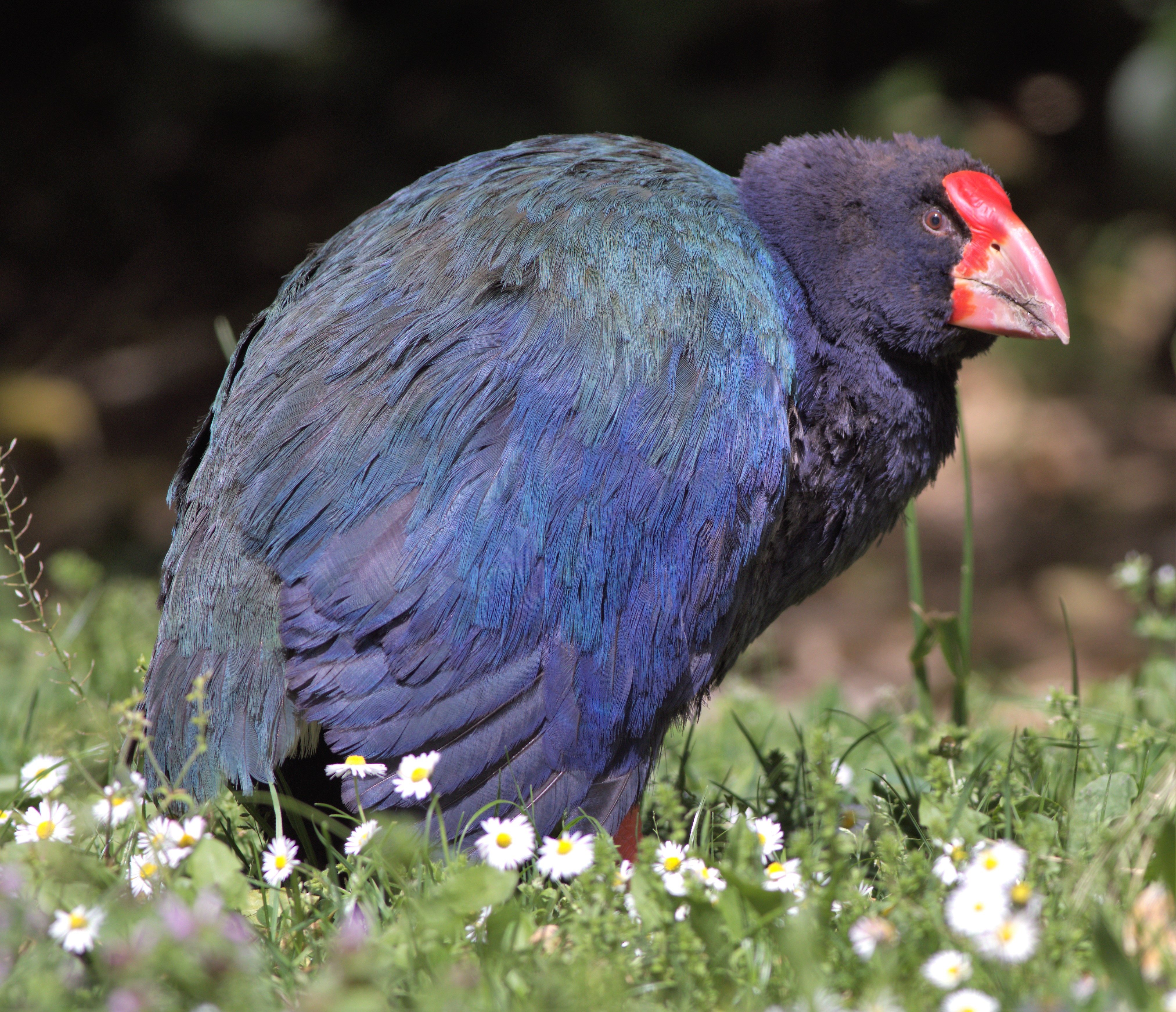
Takahe, another species brought back from the brink, has been introduced to Zealandia but the single pair there has yet to breed. I’ve seen this species previously in the South Island’s Murchison Mountains - the only place where a wild population survives.
A male Rifleman rounded up a fine trip.

Thursday, 10 November 2022

New Zealand Part 2: Westland Petrel Flying High

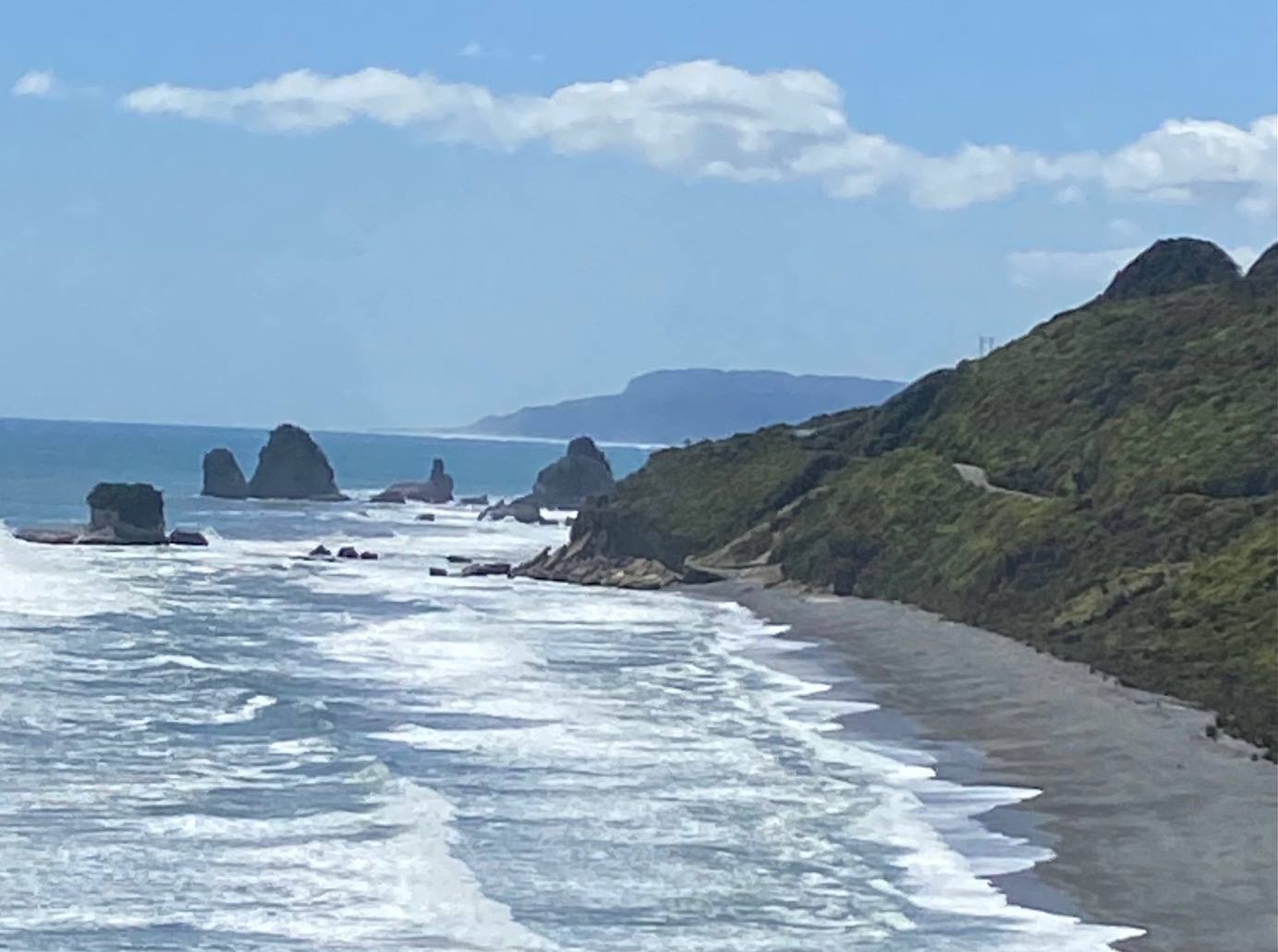
Other than kiwis (following post) I was keen to catch up with a few other NZ birds I’d missed during my previous 6 or 7 visits to the country. One is an endemic breeding seabird, the Westland Petrel, which is an occasional visitor to Australian waters but one I’d missed on multiple pelagics. We had a few days in the delightful town of Punikaiki with its dramatic coastal scenery (below) and abundance of forest.
The petrels breed nowhere but in a 4km stretch of forest at elevations at between 50 and 250m within a couple of kilometres of the coast south of Punikaiki (below).
I positioned myself by Coast Road 5km south of the town at sunset near Scotsman Creek. The birds fly over here to reach their nests in the Te Ara Taiko Reserve after dark. About half an hour after sunset, between 50 and 70 petrels duly flew over at varying heights. Although getting dark they were clearly large, all dark Procellaria petrels. These birds are winter breeders and chicks are only just beginning to fledge now; many more birds fly over earlier in the breeding season.
While waiting for the petrels I saw a Shining Bronze-Cuckoo of the NZ-breeding nominate subspecies.
Although ticked, I was keen for more petrel encounters. Bruce Menteath runs petrel-viewing tours on his property which accommodates a couple of the 36 sub-colonies spread over a breeding area of 8 square kilometres. I met Bruce at sunset and walked the 200 stairs to a viewing platform used by petrels as a launching pad for returning to sea after feeding chicks. Bruce explained that birds usually land within 1 square metre of a favoured landing site and walk from there for 10-20 metres to the nest. Unfortunately we failed to see any adult birds – which was highly unusual - but Bruce showed me a well-developed chick in its burrow (below) on the way down. He refuses to accept payment if he fails to show clients an adult bird.
About 4000 petrels breed in the area and the total population is estimated at 10,000, so the birds appear to be holding their own. Locals do their bit by turning off street lights when newly fledged youngsters are at risk from vehicle and street lamp strike.
Other endemic NZ birds doing well around Punikaiki included Weka, which appeared to be everywhere. The species is one of the problem predators of petrel chicks and eggs. Weka (adult with chick below) on the trip generally were much more numerous than during my past visits to NZ, and were absurdly tame.
Grey Gerygone was abundant, as was the NZ Grey Fantail.
The charismatic Tui was all over the place.
So was the friendly Tomtit.
Two endemic ducks, NZ Scaup and Paradise Shelduck, were widespread and common, while Glenn saw a Blue Duck fly over at Arthur’s Pass, which we visited before Punakaiki and after arriving in Christchurch.
Variable Oystercatcher is common along the coast.
A thriving colony of White-fronted Terns can be enjoyed at close quarters at the Pancake Rocks south of Punakaiki.
After visiting Punikaiki and Picton (the subject of another post to come) we crossed from the South Island to the North Island across Cook Strait on the Islander ferry. I knew that at this time of year, Westland Petrels are quite common in Cook Strait and I saw several from the boat’s deck. Although quite distant, a couple were close enough for half-decent images (first and last in this post) and to clearly see the diagnostic bill features in the field.