Sunshine Coast Birds
Birding and other wildlife experiences from the Sunshine Coast and elsewhere in Australia - and from overseas - with scribblings about travel, environmental issues, kayaking, hiking and camping.
Sunday, 3 October 2021
North Queensland Spring 2021 – Part One: The journey north & Atherton Tablelands
We headed up to north Queensland for a month-long sojourn with the central focus being a visit to Iron Range on Cape York. No caravan this time as much of the trip was accommodation-booked. That was handy in some respects but we missed the van. Overnight stops at Mt Larcom and Sarina before Ayr, where the first birding was underway in a fine mix of freshwater wetland and mangroves along Old Wharf Road near the town. Brolga (below) and Black-necked Stork were about.
Of surprise was a grouping of 8 Wood Sandpipers (below) – an unusually large concentration for this species. A few Red-kneed Dotterels and Sharp-tailed Sandpipers were on the wetland.
In the mangroves were Shining Flycatchers (above) and Yellow White-eye (below). The white-eye is inexplicably scarce along the east Queensland coast and indeed this was a state tick for me.
Large-billed Gerygone (below) and Olive-backed Sunbird were common.
We moved on to Ingham and checked out the Tyto Wetlands. A 2.5m Saltwater Crocodile (above) was here; rangers had set a trap with wild pig bait, presumably for this animal. Also about were two big Red-bellied Black Snakes (below) embroiled in what seemed to be territorial fight between males.
Green Pygmy-Goose (above) was common and Northern Fantail (below) put in an appearance.
We moved on to Forrest Beach (below) nearby, a delightful retreat. Mostly we opted for caravan park cabins on this trip, or motel rooms when these were not available. The park here is excellent.
Brown-backed Honeyeaters were attending a nest nearby.
I visited the indigenous-owned Mungalla Station (below) which like the rest of the countryside was lush and green after consistently good rains this year.
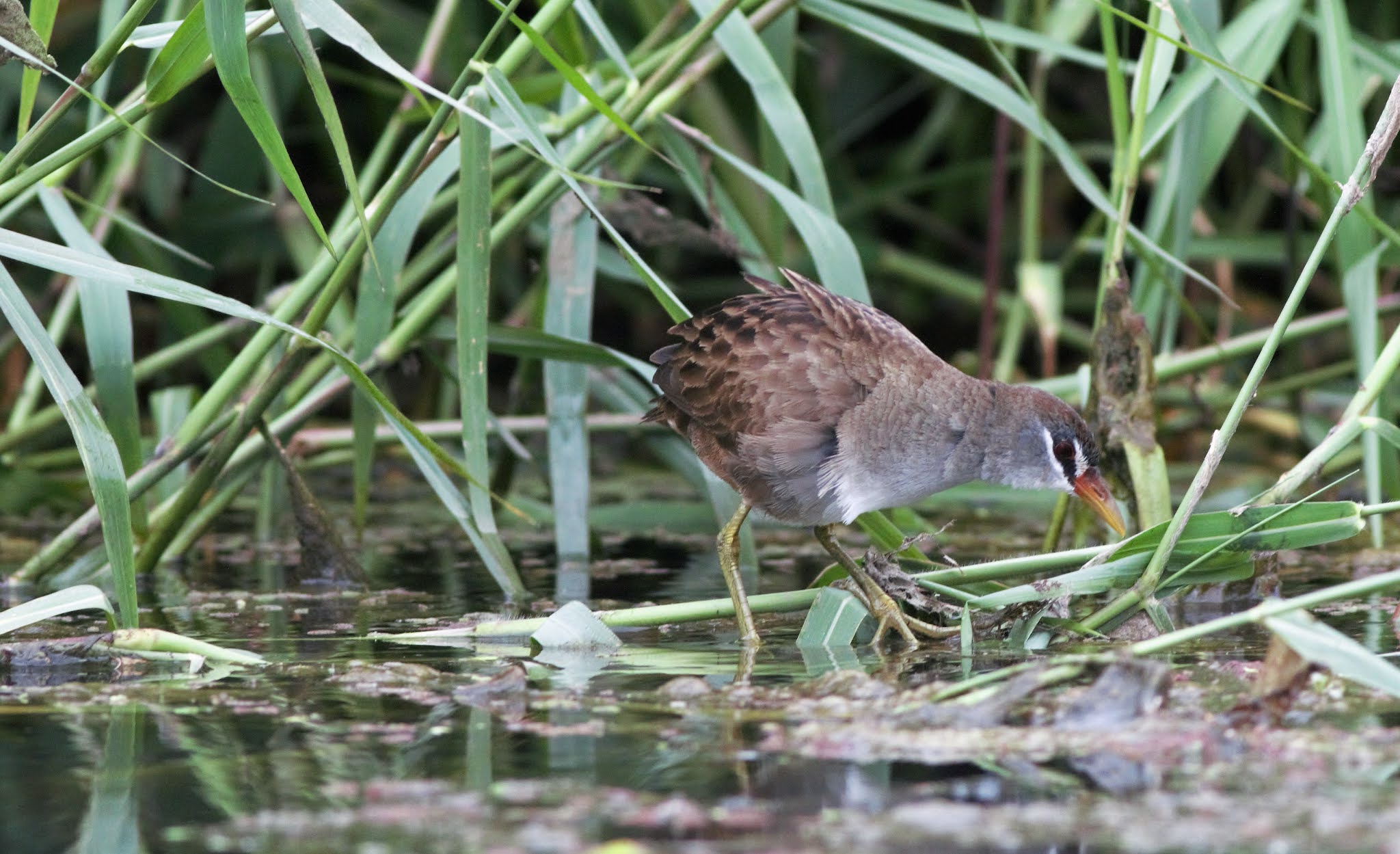
I heard White-browed Crake in a few places and eventually had excellent views of a bird close up.
Crimson Finch showed nicely on lawns around the homestead.
I found a 3.5-metre Saltwater Crocodile hauled up on the banks of a waterhole.
It was then on to the Atherton Tableland, taking a look at the Millaa Millaa (below) and other fine waterfalls along the way.
We called in on the Nerada tea plantations, a hotspot for daytime views of Lumholtz’s Tree-Kangaroo. A tree-kangaroo (above) duly obliged, as a curled up Green Ringtail (below) dozed in a nearby tree.
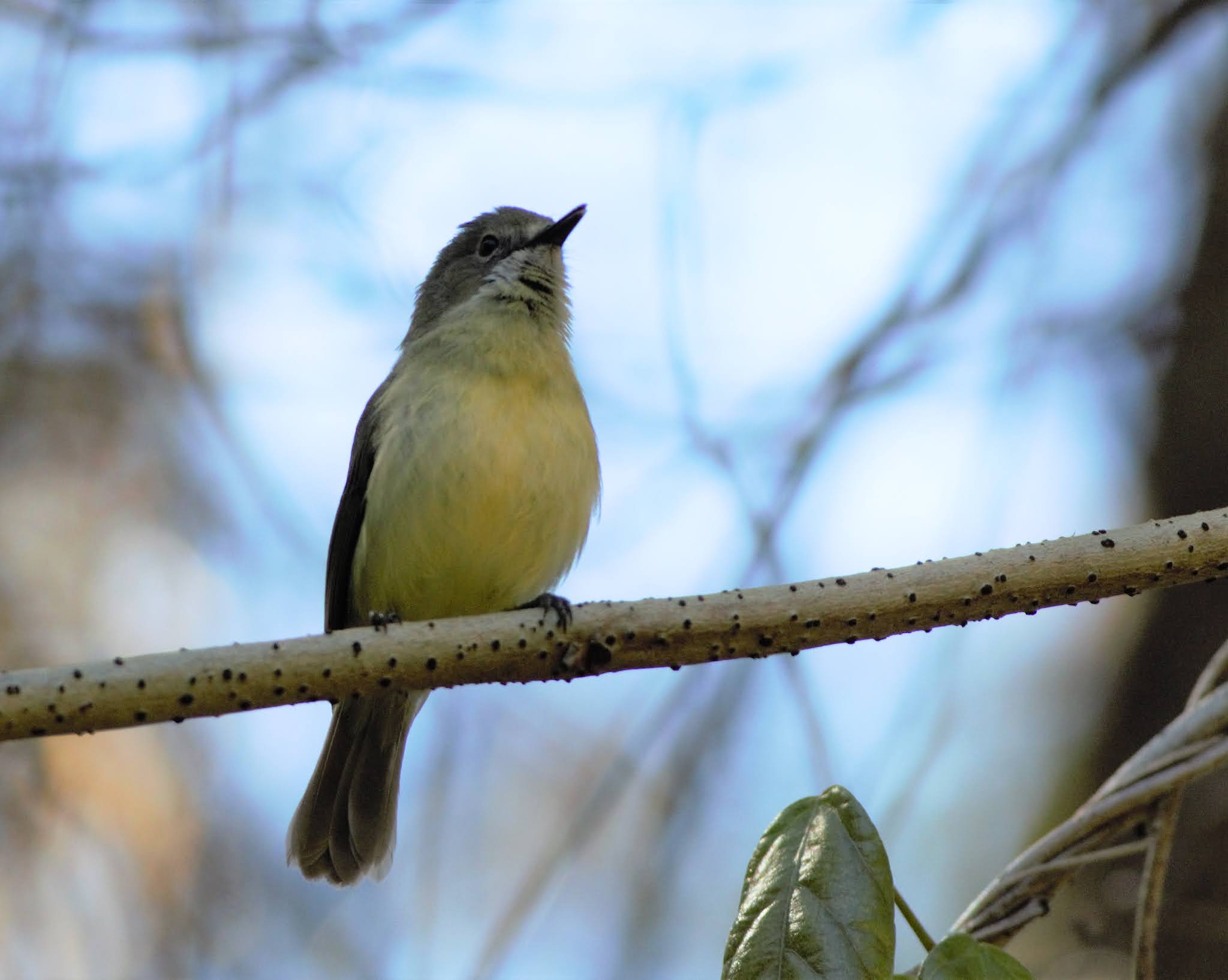
We settled in to a cabin in the Lake Eacham Tourist Park for a 4-night stay. Grey Whistler (below) and Bower’s Shrike-thrush were among the birds about the cabin.
Spotlighting around the Lake Eacham picnic area turned up a Northern Long-nosed Bandicoot (above). A Coppery Brushtail (below) was seen at the Curtain Fig near Yungaburra.
The cream of the cake came with a Lesser Sooty Owl near the Lake Eacham tourist park. I’d been chasing this species for an image for some time so to have one performing at eye level so well was gratifying.
Another one I’d been chasing for a picture was Tooth-billed Bowerbird, which is difficult to find in the dry season as it is not calling. It was certainly calling during this trip, and a bower was found at nearby Lake Barrine.
We called in on our friends Peter (above) and Val Valentine near Malanda. As usual, Victoria’s Riflebird (below) and other birds coming in to feed obliged nicely.
In the rafters of their home was a delightful grouping of Eastern (formerly Northern) Long-eared Bats.
We headed to Kuranda via Atherton, seeing a few Sarus Crane (below) along the way. We stayed with Alexander Watson overnight where Red-necked Crake was seen and heard – as it was at Lake Barrine – but sadly not photographed.
We had two nights in the Kuranda Rainforest Park. More rails calling but not showing. The Barron River falls (above) outside town were in full flow. The newly renamed and split Cryptic (formerly Graceful) Honeyeater (below) was common.
Wednesday, 1 September 2021
Unusual encounters with Sunshine Coast rodents and backyard critters
I had some excellent encounters with rodents and an antechinus in the Sunshine Coast area over the winter months. A Grassland Melomys (Melomys burtoni - above and below) was much appreciated as it was released from a trap in which it was caught near Bli Bli during environmental surveys conducted by Wildwise Environmental Services. The site was in open forest adjoining a narrow strip of subtropical lowland rainforest that is flanked by mangroves along the Maroochy River.
Also in a survey trap at the site was a Buff-footed Antechinus (Antechinus mysticus - below). This species was recently split from the widespread Yellow-footed Antechinus. Its range and status in South-East Queensland is unclear but it is known from elsewhere in the Sunshine Coast region.
I’ve continued to come to grips with my relatively new thermal monocular. I found the Grassland Melomys’s close relative, a Fawn-footed Melomys (Melomys cervinepes - below) in rainforest near Kureelpa Falls, not far from home. It was sitting motionless in a tree three metres from the ground, about an hour before sunrise. Using the monocular, I found another Fawn-footed Melomys in rainforest at Booloumba Creek along with a Bush Rat (Rattus fuscipes).
The Water Rat, or rakali, is reasonably common but seldom spotted as it is shy and usually nocturnal. I was surprised when one came out into the open in the middle of the busy Lake Alford park in Gympie mid-afternoon. Looking very wet, the animal (below) nonchalantly groomed itself for several minutes in full view of a throng of human passers-by and onlookers.
It’s now 10 months since we moved from Ninderry to Nambour in the Sunshine Coast hinterland. Some of the Ninderry critters are missed, especially the Eastern Grey Kangaroos, but we’re happy with the new home, and there’s a fair bit to watch. The verandah offers fine views from the town’s western hill ridges out over the Nambour valley. The hills are part of the crater wall of an ancient volcano.
Raptors seen from here include Square-tailed Kite (above) and Grey Goshawk (below).
Elsewhere in the garden, a Dwarf Crowned-Snake (below) was a nice fine. Bluetongues like the rock walls around the house and are often encountered. Dark Bar-sided Skinks are about. Frogs including Graceful Tree-Frog and Tusked Frog are attracted to an ephemeral pool that forms in bush at the base of the property after rain. Not much on the mammal front so far but an Eastern Ringtail was located during the day thanks to a flock of hysterical Noisy Miners.
During a visit to Brooyar State Forest I found a colony of Yellow-tufted Honeyeaters (below) on the main state forest road, 2km in from the Wide Bay Highway (second entrance along from Gympie). The species is highly localised in South-East Queensland and rare in the Sunshine Coast region. Fuscous Honeyeater – another localised species - was also plentiful here.
Good numbers of Red-tailed Black Cockatoos were feeding on white cedar berries nearby at Scotchy Pocket.
I enjoyed a walk through the Kawana Forest Environmental Park in the southern Sunshine Coast. A good variety of habitat here includes melaleuca wetland, grassland, subtropical rainforest patches and mangroves.
Nice birds included Fairy Gerygone (above), Dusky Honeyeater (below) and White-eared Monarch. The park is likely the southern-most Sunshine Coast site where the gerygone and honeyeater can be found readily. A pair of Fairy Gerygones, likely to be nesting, were also seen at Port Cartwright, at the northern end of the point’s forest patch.
In other activities we completed an 11.5km hike through Kondalilla Falls National Park. We took two vehicles to the Lake Baroom end, leaving one there and taking the other to the falls end. The one-way walk (below) is beautiful if strenuous. Following good rains this year, the rainforest is looking vigorous and fresh and creeks are running strongly.
A pair of Marbled Frogmouths spotted at their day roost in a tangle of thickets was a pleasant surprise.
Friday, 23 July 2021
Green Tree-Frogs in Queensland & NSW - Death by Chytrid Fungus
The dreaded chytrid fungus is believed to be responsible for the mysterious deaths of growing numbers of Green Tree-Frogs in Queensland and NSW. Dead and dying frogs have been reported from as far north as Yeppoon in Queensland to south of Sydney. While the fungus is known to favour colder weather, a substantial concentration of deaths have not been noted previously in this species, a favourite of Australian frog enthusiasts.
The frog in the image above was found this morning in the driveway of a friend at Marcoola on Queensland’s Sunshine Coast. Like many other reported casualties, it was in the open during the day, its legs slightly splayed, and close to death. Underneath it was bright pinkish-red, a feature being noted consistently in dead frogs reported elsewhere.
Chytrid fungus attacks parts of a frog's skin that have keratin in them; frogs breath through their skin so they are effectively suffocated. The fungus also damages the nervous system. It is widespread around the world and believed to be native in Australia, but what factors trigger deadly outbreaks from time to time are not known. Chytrid wiped out several species of frog in the late-1970s that lived in mountain rainforest streams in Queensland, including the remarkable Gastric-brooding Frog (below). Hundreds of frog species around the world have been impacted.
Australian Museum biologist Jodi Rowley told the ABC this week: "We're hoping this is just a temporary thing and as soon as the weather warms up the frogs will be able to bounce back, but we are pretty alarmed. This is particularly alarming because you don't often see a dead frog – they decompose pretty quickly - so when you do see them you know that there's probably more of them around and we're very worried."
Last week, the Queensland Frog Society posted an alert on its Facebook page of reports of sick and dead Green Tree-Frogs. Within 24 hours, the society had received 50 reports from Queensland and NSW, like the one above from Scotts Head, NSW. The following are samples:
“Found one on my verandah at Nana Glen near Coffs Harbour NSW. He was red and stiff and could barely breathe. Very sad." /
“One in my shower drain looked brown on his back. I tried saving one on the patio, put him in the [frog] hotel and was dead by morning.” /
“We've also been finding dead frogs on our property. We are located in Junction Hill just north of Grafton NSW. We've noticed that it is all ages of frogs from young ones to some of our oldest that we've had here for approx 8yrs. “ /
“Emptied a half dozen at least out of tank strainer.” /
“I found 2 dead in Casino NSW. Thought it was so weird they were red in colour.” /
“I lost one of my frogs… red legs splayed out in my Moss pot. Poor fella. Yeppoon. Central Queensland. July.” Below is what a healthy Green Tree-Frog looks like.
Subscribe to:
Posts (Atom)