Sunshine Coast Birds

Birding and other wildlife experiences from the Sunshine Coast and elsewhere in Australia - and from overseas - with scribblings about travel, environmental issues, kayaking, hiking and camping.

Friday, 6 December 2019

South-East Australia Road Trip Spring 2019: Part 5 - Eaglehawk Neck Pelagic

Southern Royal Albatross

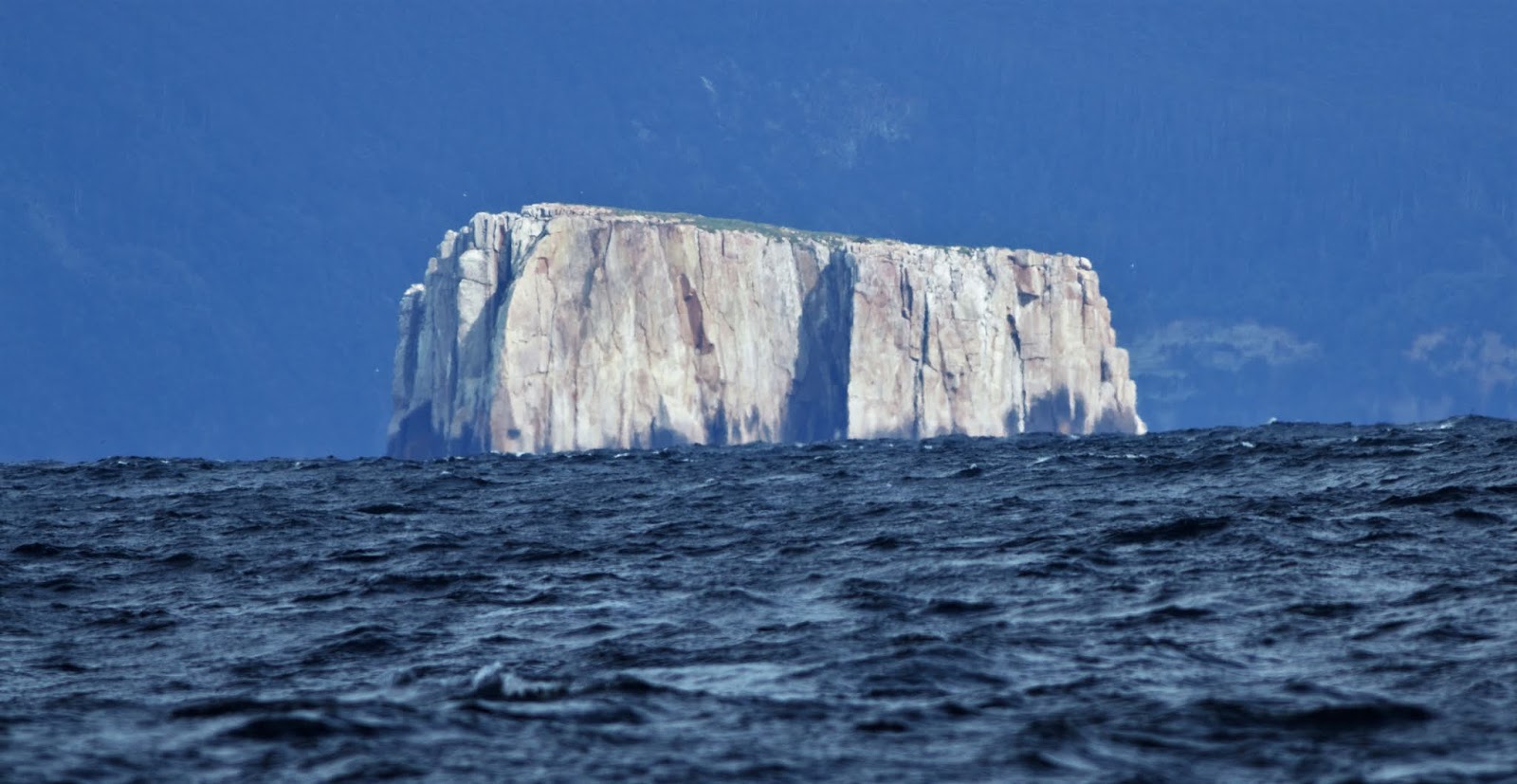
From Port Arthur I joined a pelagic trip on November 9. I'd messed up the dates for another trip organised by Paul Brooks that I'd been booked on so was fortunate that Bernie O'Keefe and Hedley and Irena Earl made room for me on this one, which Paul also joined. We headed out of Eaglehawk Neck and past the imposing Hippolytes with its attendant Australian Fur-Seal colony.

Australian Fur Seal

Hippolytes
A blustery south-westerly of up to 25 knots was blowing with a 2-3 metre swell in conditions which would have been marginal for the south-east Queensland pelagics but are commonplace in Tasmania. It took us about 2.5 hours to reach the shelf.

Shy Albatross
One of the things we miss in Queensland is big numbers of albatross and it was sheer joy to once again be among these beautiful birds. Although I've been on numerous southern pelagics in years long gone, it's been quite some time between drinks. I was impressed by the chumming methods used on the boat. The deckhand was devoted to the task, dividing his time between cutting up and dispensing chicken skins, and pulverising fish scraps in a berley bin attached to the back of the boat. The results were impressive.

The first of several Southern Royal Albatross appeared soon after our arrival off the shelf and a couple of Antipodean (Gibson's) Albatross were seen. 

Southern Royal Albatross

Southern Royal Albatross
Antipodean Albatross

Antipodean Albatross
Shy Albatross was, as expected, easily the most common with a maximum of 40 or so at one time around the boat and many more during the day. We had 2 Black-browed Albatross and 3 Campbell Albatross while out wide. 

Black-browed Albatross

Campbell Albatross

On the way back we had a Buller's Albatross up close and distant views of a Light-mantled Albatross as it disappeared into the distance before anyone could get onto it.

Buller's Albatross
White-chinned Petrel was common. Good numbers of Short-tailed Shearwater were about, possibly indicating a late return amid suggestions that the species suffered severe declines while on migration during the northern summer. 


White-chinned Petrel

White-chinned Petrel
A few Northern Giant-Petrels offered fine close-up views and a single Southern Giant-Petrel was often behind the boat. A single Grey-backed Storm-Petrel was seen briefly.
Ebird list.


Northern Giant-Petrel

Southern Giant-Petrel


Friday, 8 November 2019

South-East Australia Road Trip Spring 2019: Part 4 – Devonport to Port Arthur


Swift Parrot
After visiting Glenrowan we continued south to Port Melbourne to board, with caravan in tow, the Spirit of Tasmania ferry for an overnight crossing of Bass Strait. We had a comfortable self-contained cabin and the bar and restaurant were fun. We arrived in Devonport early the next morning and headed east to the coastal holiday town of Bicheno for a two-night stay.  The area wasn't overly birdy but the first Tasmanian endemics were photographed: Yellow-throated Honeyeater and Yellow Wattlebird.

Yellow Wattlebird

Yellow-throated Honeyeater
We did a day-trip to the beautiful Freycinet Peninsula where we had the Tasmanian race of Echidna up close.

Tasmanian Echidna

Freycinet Peninsula
We moved further south to Orford for two nights in the local caravan park run by a couple who should definitely not be in the hospitality business. The endemics continued with Black-headed Honeyeater, the 600th bird species in Australia that I've photographed, and Yellow Rosella.

Black-headed Honeyeater

Green Rosella
I sorted out Tasmanian Thornbill from the more numerous Brown Thornbill without much trouble along Wielanta Road. The Tasmanian race of Striated Pardalote (Yellow-tipped) was common. Owling at night was unsuccessful due to the cold, windy conditions which would plague us over the next few days.

Striated (Yellow-tipped) Pardalote

Tasmanian Thornbill
Black-faced Cormorant, White-fronted Chat and Kelp Gull were among birds about.

Black-faced Cormorant

Kelp Gull

White-fronted Chat
Several Hooded Plovers were seen near a fenced off area where they are breeding successfully.

Hooded Plover
We continued south to the historic town of Port Arthur, where the holiday park was pure delight for our four-night stay. I immediately noticed loud parrot noises near the caravan and realised small flocks of 30+ Swift Parrots was feeding along a 200m stretch of flowering Tasmanian blue gum. They were to remain close by during our stay, sometimes feeding on the ground. We saw flocks also in the Port Arthur Nature Reserve and at Fortescue Beach.

Swift Parrot

Swift Parrot flock on ground
Black Currawong kept the endemics ticking over and Bennett's Wallaby and Red-bellied Pademelon were common in the campground.
Black Currawong

Red-bellied Pademelon
About 10 Cape Barren Geese were seen along the road in and Forest Raven was common.

Cape Barren Goose

Forest Raven

Port Arthur


Friday, 1 November 2019

South-East Australia Road Trip Spring 2019: Part 3 - Glenrowan in Victoria

Turquoise Parrot
Following our visit to Eskdale (next post) we continued on to the northern Victorian town of Glenrowan, famed both as the birthplace of Ned Kelly and as the place where he finally met his match with state police. We did a bit of an historic tour and checked in to the Glenrowan Tourist Park for an overnight stay.

It was immediately obvious that this was one very birdy site. Just outside the reception area, Rufous Songlarks and White-winged Trillers were calling all over the place while mixed flocks of White-browed and Masked Woodswallows wheeled overhead. A small flock of White-browed Babblers foraged in the undergrowth.

White-browed Babbler

Masked Woodswallow
Glenrowan is famed as a hotspot for Turquoise Parrot and I found a fine male foraging around our campsite. I saw another single bird later but there did not appear to be any others about.

Turquoise Parrot
Gang Gang Cockatoo also put on a good show with birds coming in to drink and feeding in the trees on some kind of nut.

Gang Gang Cockatoo male

Gang Gang Cockatoo female
Other birds about included Brown Treecreeper and Crested Shrike-tit.


Crested Shrike-tit


Wednesday, 30 October 2019

South-East Australia Road Trip Spring 2019: Part 2, Warrumbungles to Eskdale


Black-eared Cuckoo
Following our visit to Deepwater (following post) we headed south to Tamworth for an overnight stay, then on to Warrumbungle National Park for two nights at Blackman Camp. We last visited the Warrumbungles in 2013, soon after the area was razed by particularly devastating bushfires. I was interested to see how it had regenerated.  
. While plenty of trees and shrubs had sprouted, as expected, huge numbers of trees remained blackened trunks, killed by the fires. So many trees with hollows were lost that authorities have built and placed scores of nesting boxes.

Fire-killed trees

Warrumbungles
Conditions were drier even than around Deepwater. Emaciated kangaroos were digging into bare earth in search of grass roots. A brief shower during our visit was so unusual that it prompted an Echidna to surface in the heat of the day. Along roads around the park, crops had perished and livestock removed as the drought intensifies.

Echidna
Best bird was a Black-eared Cuckoo in a patch of cypress pine just west of the national park boundary. Other cuckoos included Channel-billed and Pallid. 

Black-eared Cuckoo

Channel-billed Cuckoo

Pallid Cuckoo

A few White-browed Woodswallows mixed with White-winged Trillers and Rufous Songlarks were along the road. Speckled Warbler, Red-capped Robin and Yellow Thornbill were among the birds in woodland remnants. 


Red-capped Robin

Speckled Warbler

White-browed Woodswallow
A small flock of Turquoise Parrots flew through the camping ground late one afternoon. A White-winged Chough was enamoured with our car window and a couple of Emus were seen.

White-winged Chough

Emu
We moved on to the delightful town of Parkes for an overnight stay. South of here a stop at Lake Forbes was productive with several hundred Pink-eared Duck and at least 40 Freckled Duck seen. 


Freckled Duck & Grey Teal


Pink-eared Duck & Grey Teal
We moved on to Wagga Wagga for another overnight stay. Along the Murrumbidgee River, several Long-billed Corellas – here at the eastern end of the range – mixed with flocks of Little Corellas. At the town golf course I had three encounters with Superb Parrot – a pair and two singles – but they were flighty and could not be photographed.


Long-billed Corella
We continued south across the Victoria border to the delightful hamlet of Eskdale, where we had a couple of nights staying with our dear friends Bill and Sandra Watson. A Peregrine Falcon put on a show in the late afternoon and a pair of Grey Fantails were attending a newly constructed nest.


Peregrine Falcon

Grey Fantail on nest