Sunshine Coast Birds

Birding and other wildlife experiences from the Sunshine Coast and elsewhere in Australia - and from overseas - with scribblings about travel, environmental issues, kayaking, hiking and camping.

Tuesday, 14 May 2019

Taiwan 2019 Part 1 – Mountains of Dasyueshan

Swinhoe's Pheasant

We spent two weeks doing a self-drive trip around Taiwan with the aim of seeing all the country's endemics and specialties, with plenty of time for relaxing and sight-seeing. This was followed by a week-long trip to Palau and then back to Taipei, the Taiwanese capital, for a few days before heading home. The trip was highly successful with almost all targets accounted for, including all the endemics. Although we opted not to hire a guide, Taiwan birder Patrick Lee was most helpful; his services would clearly make it easier to track down birds and find your way around (contact falcon.rusticolus@gmail.com). Thanks also to Keith Barnes for his tips.


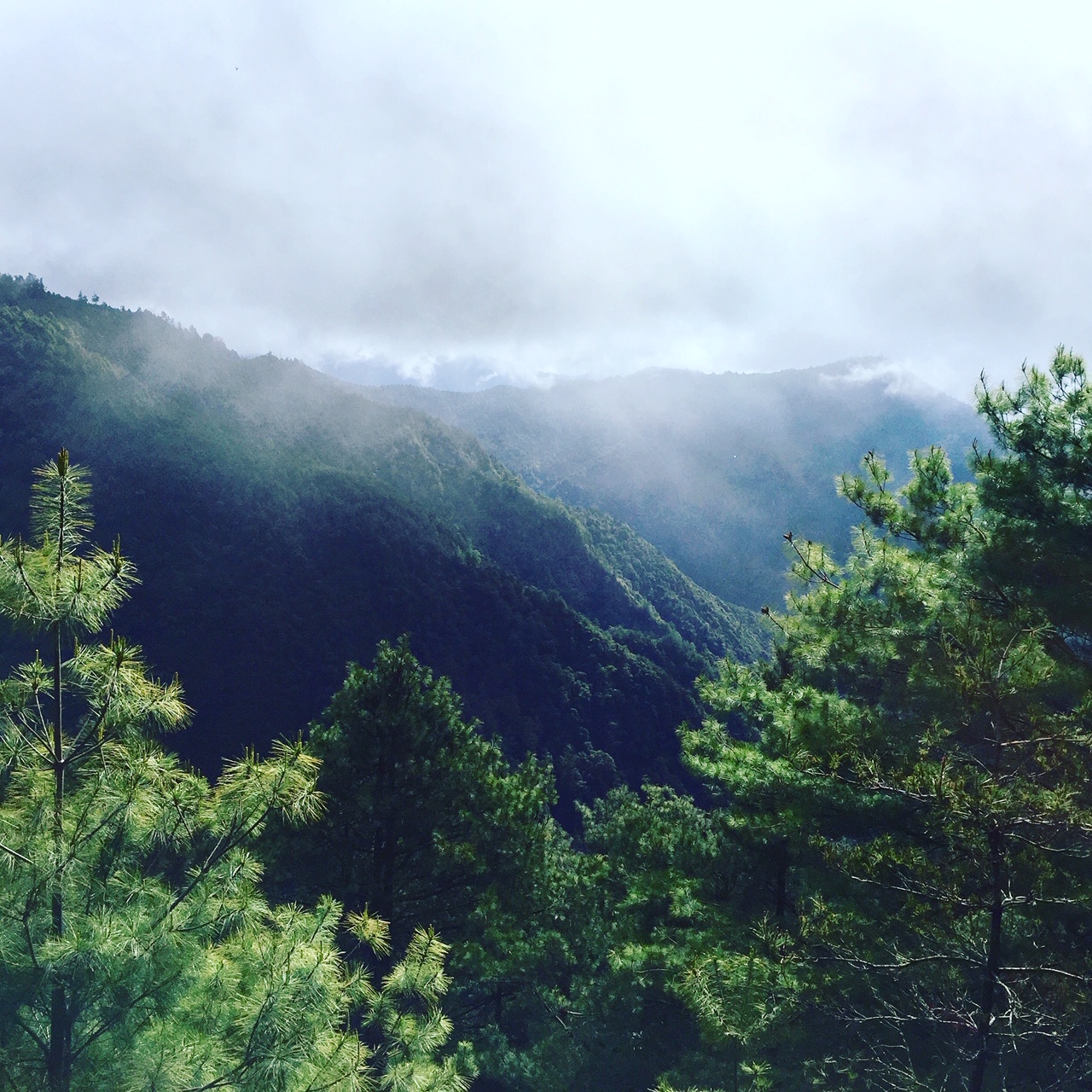
Dasyueshan - high in the mountains
We arrived in Taipei in the early morning of April 14 and headed to the town of Dongshi for an overnight stay. That afternoon I ventured up the famous Dasyueshan birding road a short distance, stopping at KM 4 in an area of second growth scrub and gardens. Here I quickly snared my first endemic – the sometimes difficult Taiwan Hwamei. More easily encountered endemics in bamboo thickets along a stream were Taiwan Barbet, Taiwan Scimitar-Babbler and Grey-cheeked Fulvetta.


Taiwan Barbet

Taiwan Hwamei
The next morning we headed up to Dasyueshan for a three-night stay at the Anmashan Mountain Hostel, kindly booked ahead by Patrick. In second-growth scrub along a rocky stream near KM 15 I had reasonable views of a flushed Taiwan Bamboo-Partridge - another potentially problematic target. Other nice birds included Plumbeous Redstart and Collared Finchbill.


Collared Finchbill

Plumbeous Redstart
Our next stop was KM 23, a known site for pheasants and partridges because they are often fed here. None appeared but the first of many Taiwan Yuhinas and White-eared Sibias in the mountains were out and about.


Taiwan Yuhina

White-eared Sibia
The entrance to the Dasyueshan National Forest Reserve is at KM 35, where a park-like area adjoins the entrance to Trail 210, a birding hotspot. A party of Rufous-crowned Laughingthrushes was found in the clearing at the entrance and a second group was seen about 1km along Trail 210 – a welcome surprise because this bird can be difficult. Also in the area were Vivid Niltava, Taiwan Macaque and Reeve's Muntjac.


Rufous-crowned Laughingthrush

Taiwan Macaque
Vivid Niltava
We continued to the park visitors' centre and accommodation lodge at KM 44, and settled into our comfortable lodge in the forest. Sadly the food in the restaurant (there's nowhere else to eat up in the mountains) lived up to its dreadful reputation. Fortunately the birds were active in the mist in trees outside the restaurant windows. Here were Taiwan Barwing, Taiwan Fulvetta and Steere's Liocichla, while Taiwan Whistling-Thrush and Pale Thrush were on the lawns outside. Pallas's Squirrel was common.

Pallas's Squirrel


Anmashan Mountain Lodge

Taiwan Barwing

Taiwan Whistling-thrush
Steere's Liocichla
The next day we drove to the end of the road at KM 50. Weather conditions were appalling all day but an odd-looking Taiwan Serow roadside at KM 48 was a surprise. A pair of Grey-headed (Taiwan) Bullfinches were seen in the mist in the same area.

Taiwan Serow

Grey-headed Bullfinch
A female Mikado Pheasant feeding on the lawn outside the interpretation centre at KM 50 could be approached closely. Also here were White-whiskered Laughingthrush, Taiwan Rosefinch and Collared Bush-Robin.

Collared Bush-Robin

Mikado Pheasant (female)
In the afternoon I headed back down the road in a vain search for better weather, but I did find a pair of Taiwan Partridges (another tough one) along Trail 210, along with a furtive pair of Mikado Pheasants. At the KM 23 site, a male Swinhoe's Pheasant was truly something to behold; it was soon joined by a second male pheasant. Large Hawk-Cuckoo had been calling loudly here and one eventually put in an appearance.

Large Hawk-Cuckoo

Swinhoe's Pheasant
With better weather the next day, we headed back up the mountain. White-browed Bush-Robin was seen at two spots around KM 47. A male Mikado Pheasant showed very nicely roadside at KM 46 after another female was seen at KM 47; I saw a total of five of this much-wanted species at four sites.

Mikado Pheasant (male)

White-browed Bush-Robin
Taiwan Bush-Warbler was seen at KM 48 with more heard, while Yellowish-bellied Bush-Warbler was common. White-whiskered Laughingthrush and Collared Bush-Robin were plentiful high up. I saw a Taiwan Shortwing and a Taiwan Cupwing briefly along Trail 230, although both appeared to be quite common by call, as did Taiwan Bush-Warbler. A single Ferruginous Flycatcher was seen on the trail.

Yellowish-bellied Bush-Warbler
Ferruginous Flycatcher
On the way back were several delightful Flamecrests at KM 47 feeding in the conifers. In the afternoon I again descended the road, where a singing Kamchatka Leaf-Warbler was at KM 39 and a group of noisy Rusty Laughingthrushes were a welcome site at KM 37.5.

Flamecrest

Rusty Laughingthrush


Outside the cabins that night, Mountain Scops-Owl was calling well but a sighting eluded me yet again, though close-up Red-and-white Giant Flying-Squirrel was a nice consolation prize.
Red-and-white Giant Flying-Squirrel
On the final day at Dasyueshan, April 18, a pair of Yellow Tits – another potentially tricky target - showed very nicely in the trees behind the restaurant .A party of Brown Bullfinches was feeding in a fruiting tree. Another male Swinhoe's Pheasant appeared brilliantly in a patch of sunlight outside our cabin.

Brown Bullfinch

Yellow Tit
On the way down on our final day in the mountains, I found a pair of Black-necklaced Scimitar-Babblers, another species sometimes missed by birders, at KM 35.5. A male Swinhoe's Pheasant crossed the road at KM 16.5; I saw a total of four of this species, all males, at three sites. We stopped again at KM 15, seeing Taiwan Bamboo-Partridge very well as a pair crossed the road. A Brown Dipper was along the river.

Brown Dipper

Taiwan Bamboo-Patridge
On the subject of dipping, the only potential targets that I failed to see in the mountains were Himalayan Owl, which I didn't search for, and the distinctive endemic race of Island Thrush.

Dasyueshan at KM 15

Friday, 12 April 2019

Night Parrot restrictions to stay in place as John Young speaks out

John Young in Diamantina National Park

The Queensland Government has pledged to continue locking up indefinitely hundreds of thousands of hectares of Diamantina National Park in the Channel Country in a move it claims will help protect the critically endangered Night Parrot.

The government's stand comes as north Queensland naturalist John Young broke his silence over criticism of his Night Parrot research. Young announced he was launching a fresh search for the Night Parrot with Winton publican Paul Nielsen. He compared his treatment with the failure of authorities to act over the disappearance of two Night Parrots in Western Australia after one was fitted with a radio transmitter.

Young resigned from his job as a field ecologist with the Australian Wildlife Conservancy last year amid a furore when critics questioned some of his records. An investigation by the AWC last month raised doubts about a clutch of eggs and a nest found by Young in Diamantina National Park and his reports of the species from Kalamurina in South Australia. Young has told supporters that he stands by his records.

The AWC scrapped not only the records in question but all research data gathered by Young in Diamantina National Park and elsewhere. Young's records of the Night Parrot in the park while working for the AWC were responsible for a 2016 decision by the Queensland Government to declare half the 500,000 hectare park a Restricted Access Area. Anyone entering the area may face heavy fines or a jail sentence.

Although those records are now disowned by the AWC, the state Department of Environment and Science said this week the restrictions would remain in place. The department rejected any suggestion there was now no firm evidence of the parrot's continuing presence in the national park, with a spokesman saying: “Evidence shows the existence of Night Parrots in Diamantina National Park. Given the critically endangered status of the Night Parrot and the potential disturbance to these birds from members of the public, the RAA over the eastern part of Diamantina is strongly justified.”

The spokesman added the RAA also helped restrict access to the adjoining Pullen Pullen Nature Refuge, where Young sensationally rediscovered the Night Parrot and took the first photographs of the species in 2013.

A Night Parrot vanished after it was caught in a mist-net and fitted with a radio transmitter in 2017 by a team headed by Night Parrot Recovery Team chief Allan Burbidge in the Each Murchison region of Western Australia. The bird's mate disappeared soon after. The pair was discovered several months earlier by a group of four WA birders.

Young took to Facebook this week to claim that the “fiasco” had gone unchallenged. “This beggars belief,” he said. “A lot of questions need to be asked here as to why on earth it was allowed in the first place and why has it been just brushed under the carpet...” Young added: “That WA capture of the most mythical bird in the world was completely out of line. Those two birds should have never been interfered with after the brilliant work Nigel [Jackett]and Bruce [Greatwich] put into finding them. Before the slightest hint of even contemplating such a thing, there should have been a long monitoring program to see how many more there were.”

Young described his critics during the AWC row as “vengeful”. He said: “You wonder whether they wake up with demons in their eyes wondering who they can take down to their level... We should all be supporting each other, not trying to undermine each other or trying to walk over each other to show how smart we are. In the process the natural world suffers and I am not going to be part of that.”

Young said he had decided to share publicly much of the information he has gathered about the Night Parrot. “Time to open the doors to give you all a chance to see this priceless bird. Much that is coming will never have been shown or told. I am going to leave no stone unturned. I made the mistake of trying to keep the locations out of site to protect the birds and was damned for it. Time to completely open the floodgates.” Over the next few weeks he would “show as much as I can and give as many hints as possible” on how to find the Night Parrot, but he would not be disclosing specific site information.


Wednesday, 10 April 2019

Oriental Cuckoo + Sunshine Coast bits & pieces

Oriental Cuckoo

Oriental Cuckoo was the only bird in the Sunshine Coast region that I hadn't managed to photograph, so this last summer I was keen to bag it. I found an Oriental Cuckoo in open forest on the Kureelpa Falls track in January but it avoided the camera. The bird hung around the same spot for the next two weeks, coming and going. While others managed to photograph the cuckoo, I couldn't find it on subsequent visits.


Oriental Cuckoo
At the end of February, Maleny birder Hans Erken had an Oriental Cuckoo on his property. It was feeding in a shady glade among orchard trees. Hans reported that the bird returned repeatedly to the same spot, even after flying some distance away. So I was pleased it was still there the next day. Unusually for migrants, this species can often be found over a period of time in a favoured haunt.


Oriental Cuckoo

Oriental Cuckoo
Elsewhere about the region, I camped overnight in March in Bellthorpe National Park, not far from Peachester. I was pleased to find a pair of Red-browed Treecreepers in wet sclerophyll forest – just the third time I've seen the species in the Sunshine Coast hinterland in the decade I've been living here. (They were formerly much more common.) Also seen were a pair of Marbled Frogmouths, while 3 or 4 Southern Boobooks were calling close to the vehicle. These birds were somewhat distant, high the trees. A Masked Owl was heard calling close by in the early-morning.


Marbled Frogmouth

Southern Boobook
Glossy Black Cockatoos have been drinking regularly around Sunrise Beach, especially in the vicinity of Rainbow Park. Australasian Shoveler has turned up at Wappa Dam and near Bli Bli. 


Australasian Shoveler

Glossy Black Cockatoo
Swamp Harrier is showing early in the season near Bli Bli, and a Black Kite was seen there catching a large cane toad.


Black Kite with cane toad

Swamp Harrier
Richmond Birdwing is looking good at Cooloolabin.


Richmond Birdwing
Eastern Ringtail has been seen a few times during the day as well as night in the home garden at Ninderry, where a white phase Grey Goshawk was photographed roosting at night.


Eastern Ringtail

Grey Goshawk white phase
With a start to the cool weather, flocks of Topknot Pigeons are feeding in the open, this bird near Cooroy this morning.

Topknot Pigeon