Sunshine Coast Birds

Birding and other wildlife experiences from the Sunshine Coast and elsewhere in Australia - and from overseas - with scribblings about travel, environmental issues, kayaking, hiking and camping.

Wednesday, 8 January 2014

Pectoral Sandpiper Near Gatton

Pectoral Sandpiper
 This morning I checked out the so-called Cross Road Lagoon at Lower Tenthill, a few kilometres south-west of Gatton. The lagoon is on your left heading from Gatton towards Lower Tenthill. I walked in to the edge from the road.
Pectoral Sandpiper
I had hoped to see an Oriental Plover found there recently. No luck there but a Pectoral Sandpiper showed very well indeed.
Pectoral Sandpiper
I was first alerted to the bird by its call as it was flying. It landed not too far away. Pectoral Sandpiper is a rare visitor to south-east Queensland.

Pectoral Sandpiper

Pectoral Sandpiper

Red-necked Avocet
 Quite a few Red-necked Avocets were present on the lake. The only other migratory waders present were one Pacific Golden Plover, one Red-necked Stint and three Sharp-tailed Sandpipers. Plenty of Whiskered Terns were also about. I visited all the Lockyer Valley hotspots as well - more on that soon.

Red-necked Stint

Whiskered Tern

Monday, 6 January 2014

Fostered Channel-billed Cuckoo

Channel-billed Cuckoo
The juvenile Channel-billed Cuckoo being fostered by a hapless Pied Currawong in our Sunshine Coast garden at Ninderry continues to thrive.

Pied Currawong
But there's a curious twist. The Pied Currawong feeding the cuckoo is bald. It appears to have lost the feathers from its head.


Pied Currawong & Channel-billed Cuckoo
There are two currawongs, presumably the breeding pair, but only the bald one appears to do the feeding.


Pied Currawong feeding Channel-billed Cuckoo

At feeding time, the much smaller currawong inserts it head quite a way into the mouth of the cuckoo (deeper than in the image above, but you get the picture). The extent of feather loss appears to approximate the area of currawong head that enters the cuckoo's mouth. So the question: Is the currawong bald because its feathers have been lost in the cuckoo feeding process?

Pied Currawong feeding Channel-billed Cuckoo

Glossy Ibis
Elsewhere, at the Parklakes Wetlands, the Australian Painted Snipe (1), Australian Little Bittern (2),  Baillon's Crake (3) and Spotless Crake (1) were all spotted yesterday morning.  At a small pool nearby, a party of 15 Glossy Ibis was present. At Dunethin Rocks on the way home, a Nankeen Night Heron was roosting in the mangroves.

Nankeen Night-Heron

Eastern Grey Kangaroo
 Saturday was the hottest day on record in much of the Sunshine Coast, with the temperature reaching 42 at Yandina and 39 at Ninderry. The big adult male Eastern Grey Kangaroo made good use of the birdbaths, as did the obviously heat-stressed birds.

Little Wattlebird

Birding Cooloolabin
This morning some of us checked out the lowland rainforest patches at Cooloolabin and around Wappa Dam, where birds including numerous Rose-crowned Fruit-Doves, Wonga Pigeon, Crested Shrike-tit and White-eared Monarch.
Great Crested Grebe

Wonga Pigeon

Thursday, 2 January 2014

Australian Painted Snipe at Parklakes

Australian Painted Snipe
Australian Painted Snipe is the latest rarity to turn up at the Parklakes Wetland near Bli Bli. This male bird was seen this morning and late yesterday afternoon at the western end of the second pond. Other local observers have seen up to four Australian Painted Snipe over the past few days, along with as many as seven Latham's Snipe.

Australian Painted Snipe

Australian Little Bittern
The pair of Australian Little Bitterns that have been around for awhile (see following posts) performed well this morning. The male and female were feeding together at one point. Both birds flew frequently from one spot to another, although they are seen most frequently in reeds along the northern edge of the second pond. Also seen this morning were 5 Baillon's Crakes, 1 Spotless Crake and 1 Little Grassbird (along with Tawny Grassbird and Australian Reed-Warbler).

Plumed Whistling-Duck & Pacific Black Duck
Plumed Whistling-Duck and Pacific Black Duck were reflective, as were these three duck species at a nearby wetland at Pacific Paradise.
Hardhead, Grey Teal, Chesnut Teal

Tawny Grassbird

Australasian Pipit

Red-kneed Dotterel
 About 20 Red-kneed Dotterels were gathered around a pool at Maroochy River. Good numbers of this species are still about the coast.
Spotted Harrier
An immature Spotted Harrier was also present at Maroochy River.

Friday, 27 December 2013

Australian Little Bittern at Bli Bli

Australian Little Bittern
The recently created Parklakes wetlands at Bli Bli on the Sunshine Coast has turned up a very smart male Australian Little Bittern.

Australian Little Bittern
Last week, I reported (see here) seeing Baillon's Crake, Spotless Crake and Little Grassbird in these excellent man-made wetlands, which are located in a new housing estate. Since then, local birders have reported seeing Lewin's Rail and Pale-vented Bush-hen at Parklakes. Then, on Christmas Day, an Australian Little Bittern was reported here.

I located the bittern early this morning, a little distantly but showing well in the north-west corner of the second lagoon. It perched on reeds at the edge of the extensive reed-bed in this lagoon in the sun as it fished. The bird caught at least one fish during the 20 minutes or so that I was watching before it disappeared into the reeds, but it was seen soon after by another observer, perched in the reed-bed.

I returned the next day and good views of the female, so there could be a pair in residence.

Australian Little Bittern


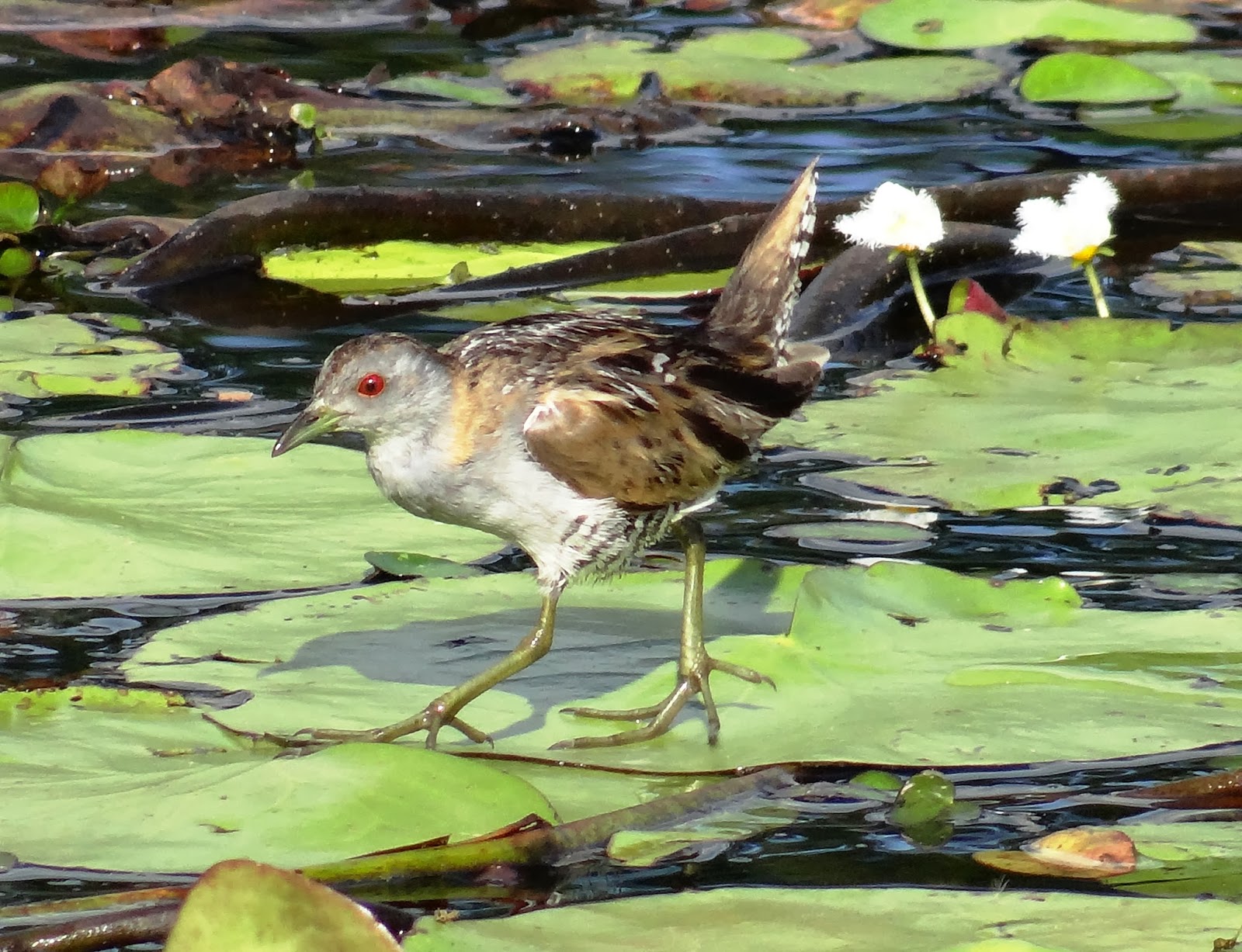
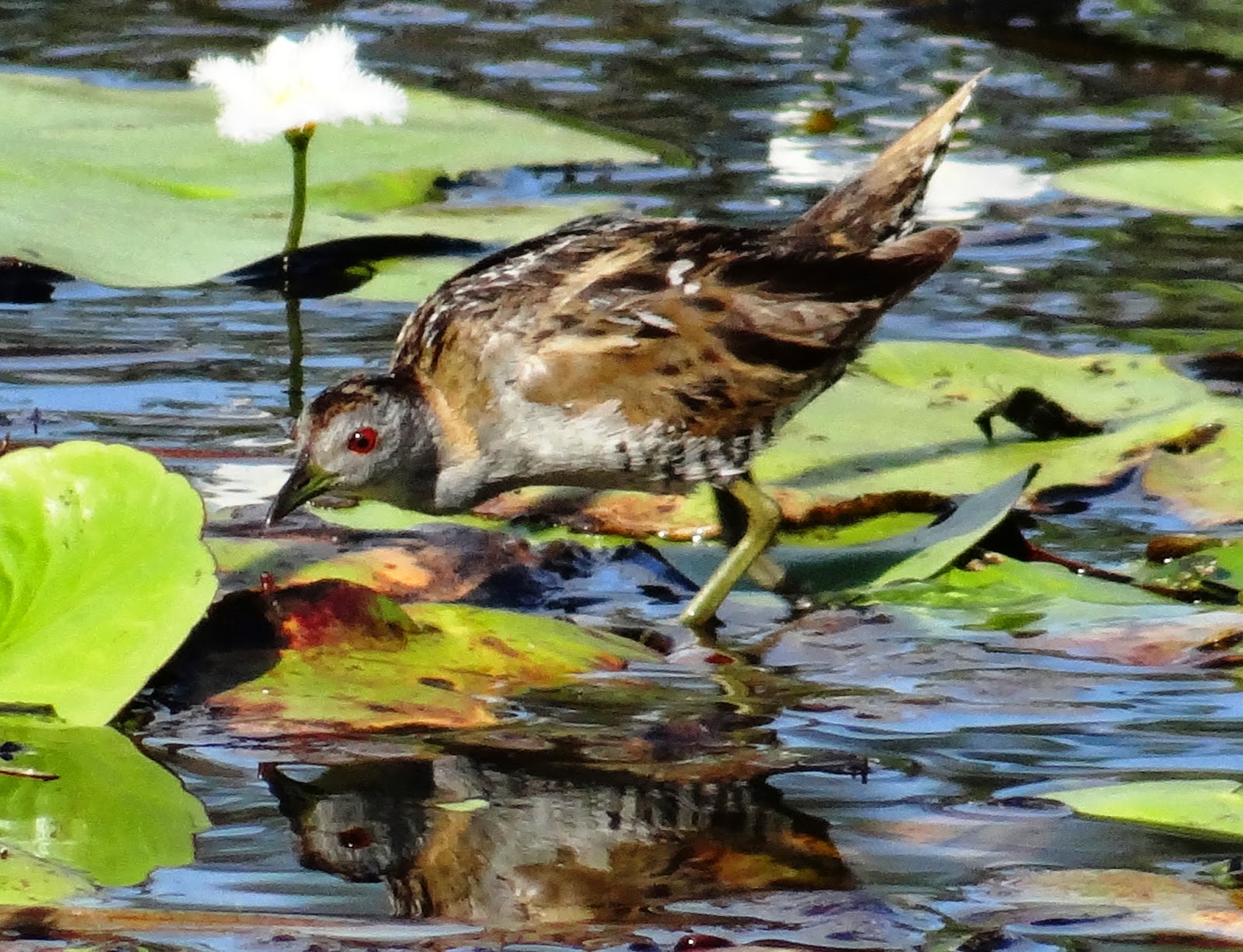
Baillon's Crake
No fewer than six Baillon's Crakes were feeding on the lilies this morning, some being quite approachable. A single Spotless Crake was also present along with six Latham's Snipe and a smattering of other waterbirds. 

Tuesday, 24 December 2013

Critter Christmas Tit-Bits

Azure Kingfisher
Nice birds around the Sunshine Coast in recent days include Eastern Grass Owl, Marbled Frogmouth, King Quail, Pale-vented Bush-hen, Spotted Harrier, Black-breasted Buttonquail, Black-necked Stork, Noisy Pitta, Barred Cuckoo-shrike and Baillon's Crake.

Azure Kingfishers were unusually common during three hours of kayaking on the Upper Maroochy River; I saw 12. A male Eastern Koel showed itself, as did a white phase Grey Goshawk. In south-east Queensland, white phase Grey Goshawks are scarce.

Azure Kingfisher

Eastern Koel

Grey Goshawk white phase
Golden Whistler
An early morning visit to Charlie Moreland Park on Little Yabba Creek was productive, as usual. Rose-crowned Fruit-Doves were calling commonly. A couple of Barred Cuckoo-shrikes showed briefly. The three monarchs - White-eared, Spectacled and Black-faced - were present. Later we moved on to Moy Pocket where a pair of Pale-vented Bush-hens showed after a little coaxing at a site where they turn up from time to time. Then on to Imbil, where a male Black-breasted Buttonquail was seen soon after arriving. It was another hour or so before fine views of a female were obtained. I've not had the birds at this spot during recent visits. A Noisy Pitta was unusually co-operative here.

Marbled Frogmouth male
An evening excursion began at Pacific Paradise where several King Quail were vocalising along with a larger number of Brown Quail in tall grassland. Then, just after sunset. an Eastern Grass Owl was seen quartering over the grassland. We moved on to Mapleton National Park in the Blackall Range where we enjoyed a prolonged, close encounter with Marbled Frogmouths. A male and female were seen well and three pairs all up were heard.

Marbled Frogmouth female
Bandy Bandy

A nice surprise was a Bandy Bandy on the road. As we tried to move it off the road, it contorted itself into its signature but weird defensive posture.

Osprey
Close views of Baillon's Crake were enjoyed during two visits to Parklakes Wetlands. A female Black-norked Stork was seen at Lake Macdonald along with Yellow-billed Spoonbill, Glossy Ibis and 5 Latham's Snipe. This fine Osprey was seen eating a fish at Alexandra Headland. A Spotted Harrier was seen at North Arm. At Cooroy, the fledgling Grey Goshawk reported earlier (see here) is now a fine-looking juvenile out of the nest.

Rufous Fantail
A Rufous Fantail was sitting on a nest at the same spot the birds nested last year at the Maroochy Wetlands Reserve, Bli Bli. Other birds here included Mangrove Gerygone, Shining Bronze Cuckoo and White-throated Treecreeper.

Shining Bronze-Cuckoo

White-throated Treecreeper
Brisbane River Turtle Emydura signata 
I called in to the Noosa Botanic Gardens at Cooroy. The Freckled Ducks that have been there for months are gone, so a nice turtle had to do.  

Sunday, 15 December 2013

Birding Bli Bli: Baillon's Crake, Spotless Crake Close Up

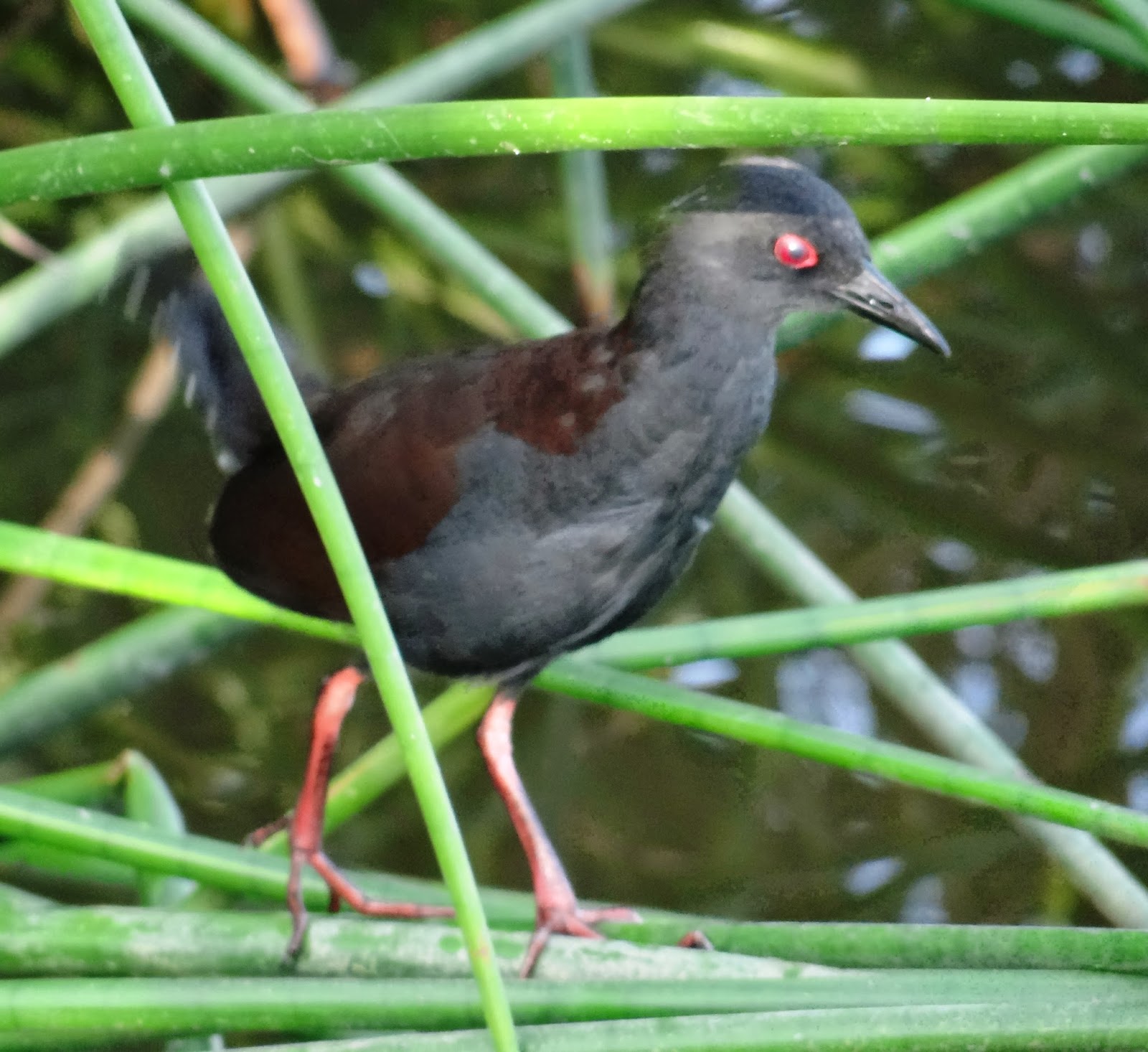
Spotless Crake
Today I visited the new artificial wetland at the Parklakes real estate development near Bli Bli. The birding was very good, with excellent, close views of Baillon's Crake and Spotless Crake, among other things. Most of us are concerned about urban sprawl but if it's going to happen, this is the way to go. Congratulations on the developers for creating a first-rate wetlands here.

Spotless Crake
I found the first Spotless Crake within minutes of arriving and saw a total of four, with others heard. The wetlands are a series of connected large ponds with just the right mixture of open water and vegetation such as lilies, sedges and rushes. Hundreds of flowering native shrubs and trees have been planted around the pond edges. All up, an impressive effort.

Baillon's Crake
 It wasn't long before I saw a Baillon's Crake, also close up.  I saw a second Baillon's a short while later.

Baillon's Crake

Parklakes Wetlands
The wetlands have lots of potential

Wandering Whistling-Duck
Other nice birds here included  Wandering Whistling-Duck, Latham's Snipe, Little Grassbird and Buff-banded Rail.
White-breasted Woodswallow

This woodswallow was nearby in the Maroochy River canefields.

Grey Shrike-Thrush
 In the garden at Ninderry, the hot weather is attracting plenty of interest in the bird bath.
Eastern Yellow Robin

Brush Cuckoo
A Brush Cuckoo shows nicely.
Peaceful Dove
 Peaceful Dove is a scarce visitor in the garden.

Black-faced Cuckoo-shrike
 A Dusky Honeyeater is presently visiting flowering shrubs.

Dusky Honeyeater
Eastern Grey Kangaroo
Plenty of Eastern Grey Kangaroos were in evidence during a visit to Toorbul, with quite a few seemingly at home on the tidal flats.